 Go to live site ↗
Axoniq: A model for selling a database people think is free, and the brand around it
A model for selling a database people think is free, and the brand around it
The Axon Server marketing model, the website it shaped, a shader that draws every blog cover, two explainer videos, the brand book and two new illustration styles.
Why
Every Axon Server page has to answer one question before any other: why pay for a database when Postgres is free? Benefits don't answer it. A better frame does.
One model
A special type of database for event-driven systems, in a plug-and-play kit made for serious enterprise.
Two battles, three narratives
Win the case for a specialized database first, then for Axon Server. Comply, mine or consolidate.
A shader for every cover
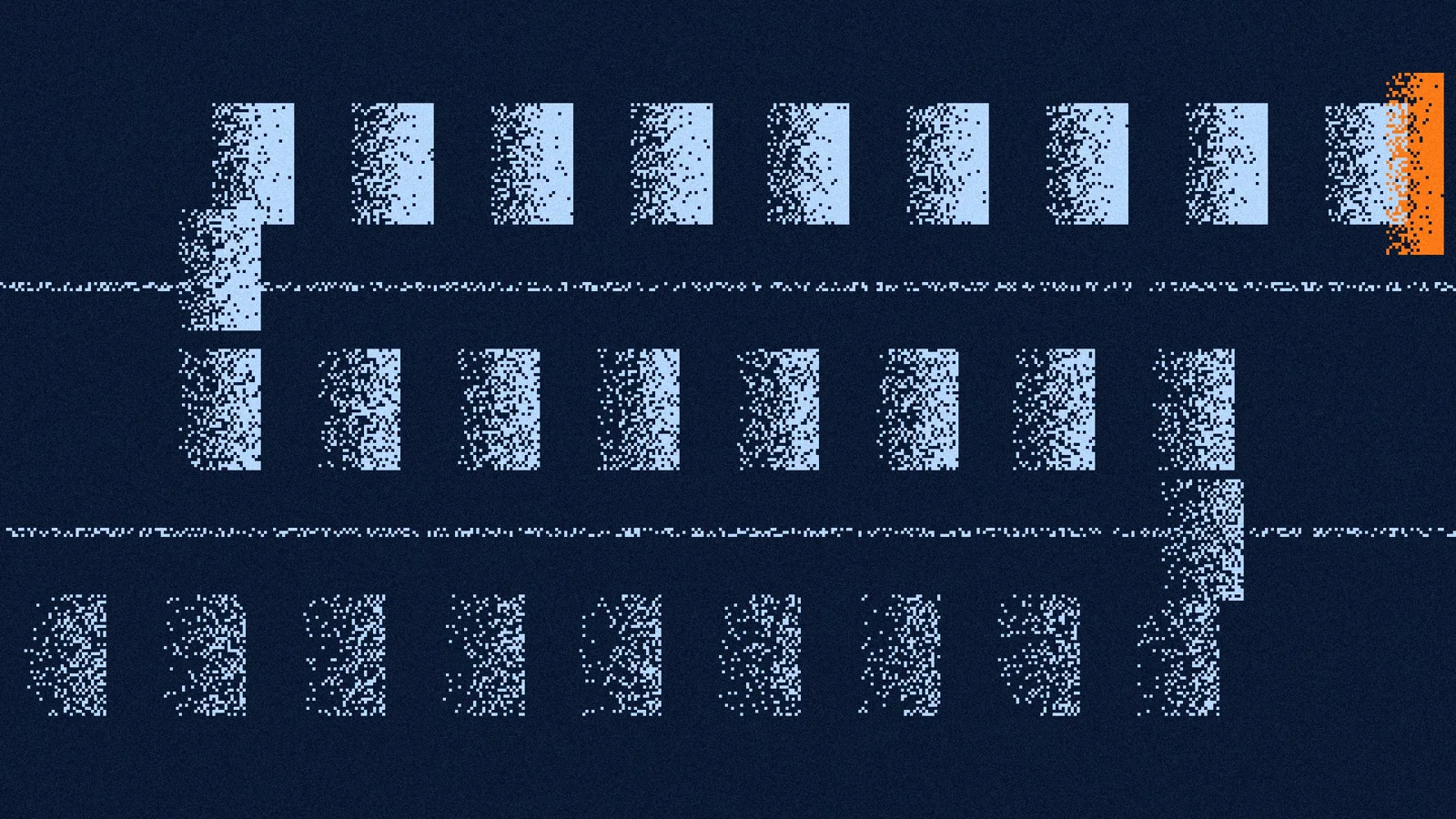
One riso fragment shader draws every concept page and blog cover on axoniq.io.
Videos for the business
Explainers for managers and executives, written, edited and produced in house.
At a glance
- Role
- Product marketing, positioning, website, video and graphic design, brand
- Model
- Axon Server, January to February 2026
- Brand book
- Version 1.0.1, February 2026, with Nisha Bagepalli and Lindsey Rose
- Illustration
- Van Gogh, riso and isometric
- Tags
- Product marketing, positioning, website, video, brand
The full story
Marketing Axon Server, and the brand around it
At Axoniq I do product design and product marketing. This piece is about the marketing half. Most of it is about one model: how to sell a database to people who think databases are free. The rest is what grew out of it, the website, the videos, the brand book and the illustrations.
1. The Axon Server marketing model
Axoniq makes Axon Framework, an open-source Java framework for event-driven systems, and Axon Server, the event store and message router that goes with it. The framework also runs on a database a team already has, usually Postgres. So the question every Axon Server page has to answer before any other is: why pay for a database when Postgres is free?
Answering with features (fast, clustered, built for events) is true and doesn't change the question. So in January and February 2026 I worked on a model instead: a way of explaining Axon Server that the rest of the marketing could hang from, and that a sales call, a landing page and a conference talk could all repeat.
Who it is for
Reader one
The engineer who already uses Axon Framework
They know why event sourcing is a good idea. They're starting to hit the walls of a generic database: slow replays, an events table that only grows, operational work nobody planned for.
Reader two
The executive, at any stage
Usually a warm lead. Someone inside the company already champions the move, or sales has nudged them and this is their first look around.
The goal: own the frame
The brief I wrote for myself said the visitor should leave with a clear, memorable and attractive mental model of Axon Server. Not a list of benefits. The benefits keep the reader busy while the page does the real work, which is to change how they frame the problem, until Axon Server is the obvious answer inside that frame.
The model, in one sentence
Every phrase in it does one job, and each one became a section of the site.
01
A special type of database
There's Redis for cache, Elasticsearch for search and Neo4j for graphs. And there's Axon Server for events, which can be projected onto all of those.
02
For event-driven systems
Applications where the event stream is the source of truth, or a critical part of it, instead of or next to one mutable state.
03
A plug-and-play kit
Batteries included. Unlike a database you assemble yourself, it scales and coordinates on its own as the load needs it.
04
Made for serious enterprise
Not an experimental database for a weekend project. It has run in production at large enterprises for a decade.
The first phrase is the important one. Nobody asks why they should pay for Redis when Postgres can cache, because everyone already accepts that some jobs get their own database. Putting Axon Server on that shelf moves the argument from "a product versus a free one" to "the right tool for a job you already have".
Two battles, in that order
The story the site tells is a funnel of two arguments, and the order matters.
If your organisation is event-driven, as it should be, you need a specialized database.
This is most of the battle. Win it and the reader is shopping for an event store, not defending Postgres.
If you need a specialized database, Axon Server is in a class of its own.
Much easier to win, against a short list, on ground we know: performance, guarantees and the framework that ships with it.
Three narratives, one product truth
A model needs a goal the reader can repeat to their boss. I gave it three, each for a different buyer, all resting on the same mechanism: a history that is ordered and can't be changed.
Comply
Make audits a query
When the primary record of the system is the history itself, an audit trail isn't a feature you add. Compliance becomes something you can prove, including against rules written after the fact.
Mine
Keep the institutional memory
Events record why something happened, not only what the state became. The log turns into the company's memory, and models trained on it learn decisions, not just outcomes.
Consolidate
Retire the stitched-together stack
One authoritative log with many replaceable consumers, instead of a database, change capture, a broker, retry logic, audit tables and replay scripts that all have to agree.
Making the hidden cost countable
The free-Postgres objection doesn't lose to an argument. It loses to an inventory. Nobody runs "just Postgres" in production at a bank. They run Postgres plus everything it takes to make it resilient, and each piece has its own tools, its own failure modes and, very often, its own contract. The line I kept coming back to: the software is free, the resilience is not.
- Replication
- Failover
- Backups
- Multi-zone
- Load balancing
- Connection pooling
- Observability
- Schema migrations
- Disaster recovery
- Security
- Capacity and sharding
The same inventory works one level down. A do-it-yourself event backbone usually ends up with four separate consensus systems, in Postgres replication, Kafka, Kubernetes and Consul, each with its own leader election and its own idea of when the network broke. You didn't remove the complexity. You spread it over four places that fail at four different moments.
Arguing fairly
Developers punish marketing that overclaims, so the model draws its line where it is true. A general-purpose database guarantees that the current rows are right. An event store guarantees time, order and causality: what happened, in what sequence, because of what. Both are real guarantees, for different jobs. The working pages say plainly what a generic database does better (ad hoc queries, joins, plain create, read, update and delete), and they warn against claims we couldn't defend, such as escaping the trade-offs every distributed system makes.
How I built it
The research was long and mostly done with language models: competitive comparisons, the Postgres stack, the cost of the open-source ecosystem in a regulated company, the three narratives. I kept dozens of working pages in Notion, several of them straight model output. That material is a quarry, not the work, and I don't quote its numbers. The work was the editing: cutting all of it down to one sentence, two battles and three narratives that a salesperson can say from memory.
From model to page
The model became the outline of the Axon Server page. What it is, in one sentence. A short manifesto: events are the lifeblood of an organisation, and Axon Server is the engine that captures them and turns them into signals. Then the funnel, as three reasons to get a dedicated event store (speed, guarantees, lower operational risk). Then the three narratives, social proof and how to get started.
2. The website
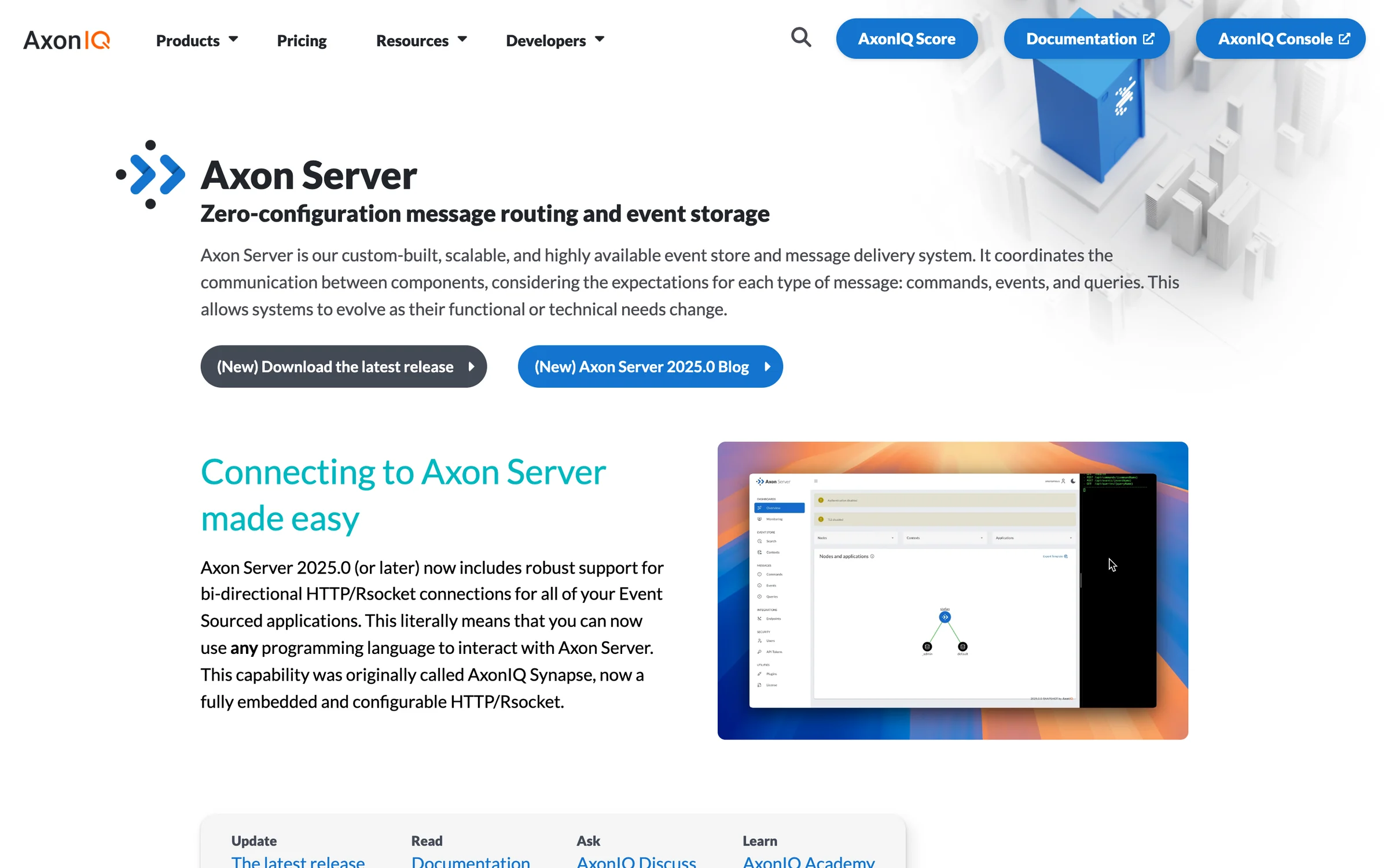
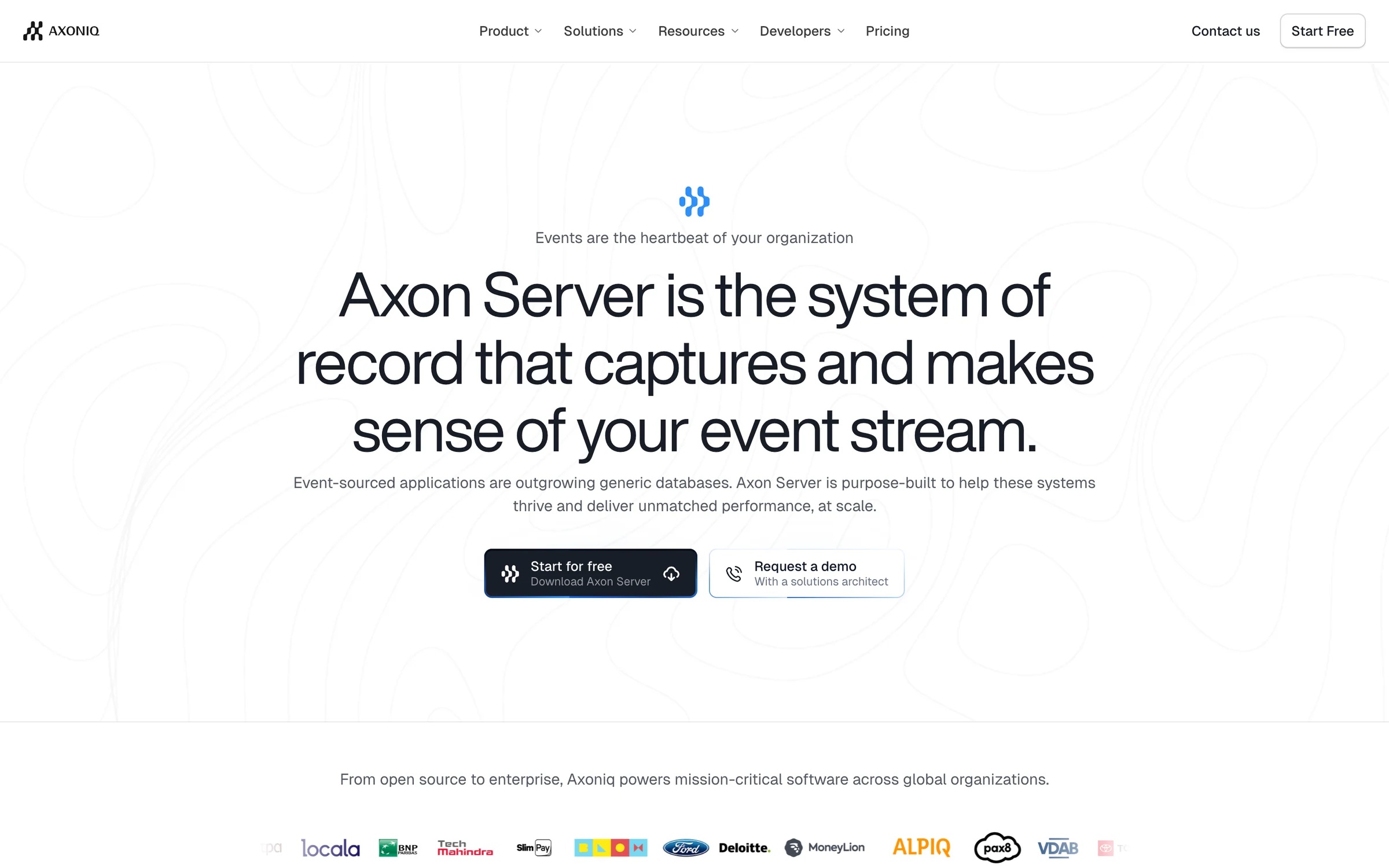
I joined Axoniq in August 2025. This is the home page a month before, from the Internet Archive, and the home page now.
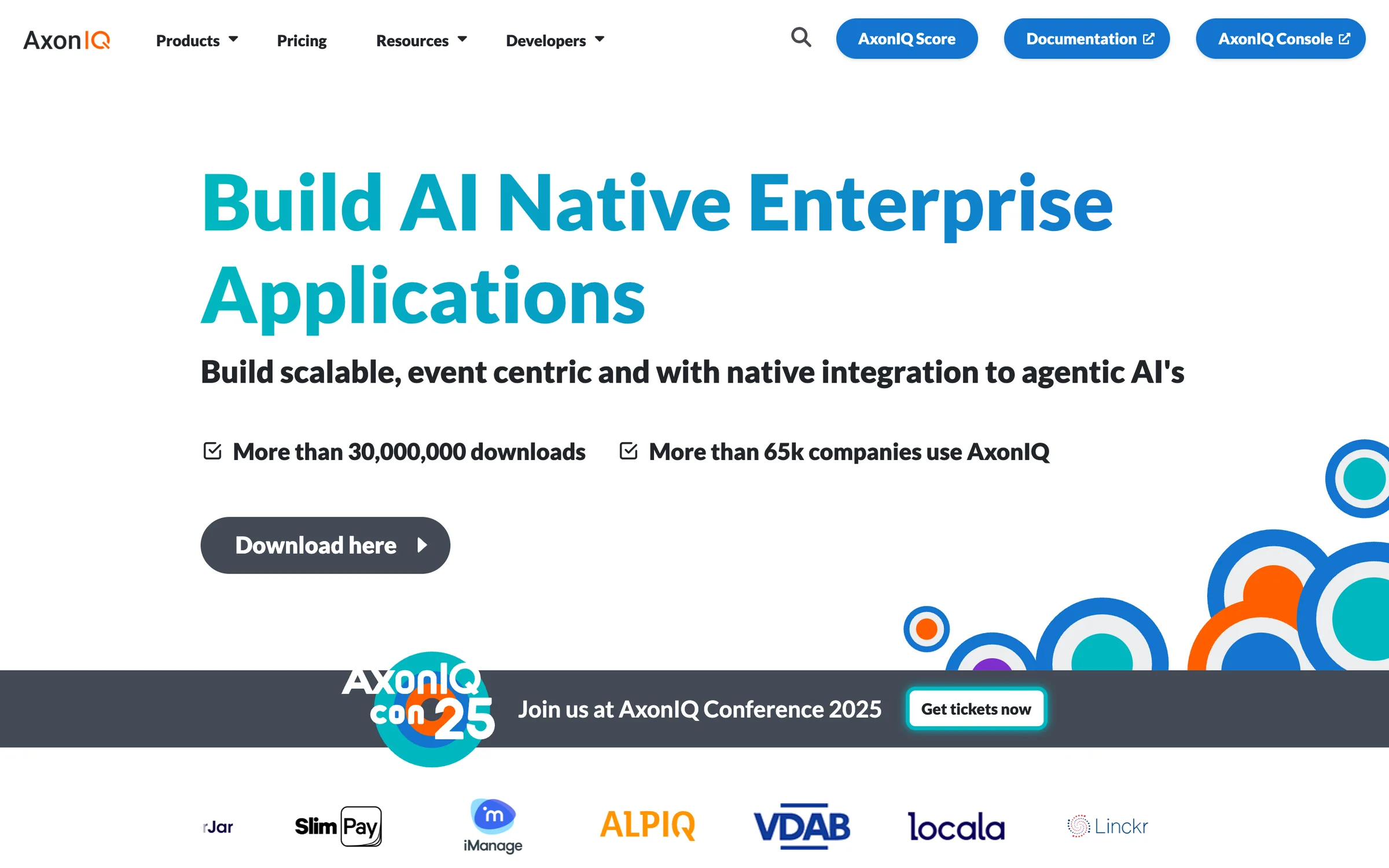
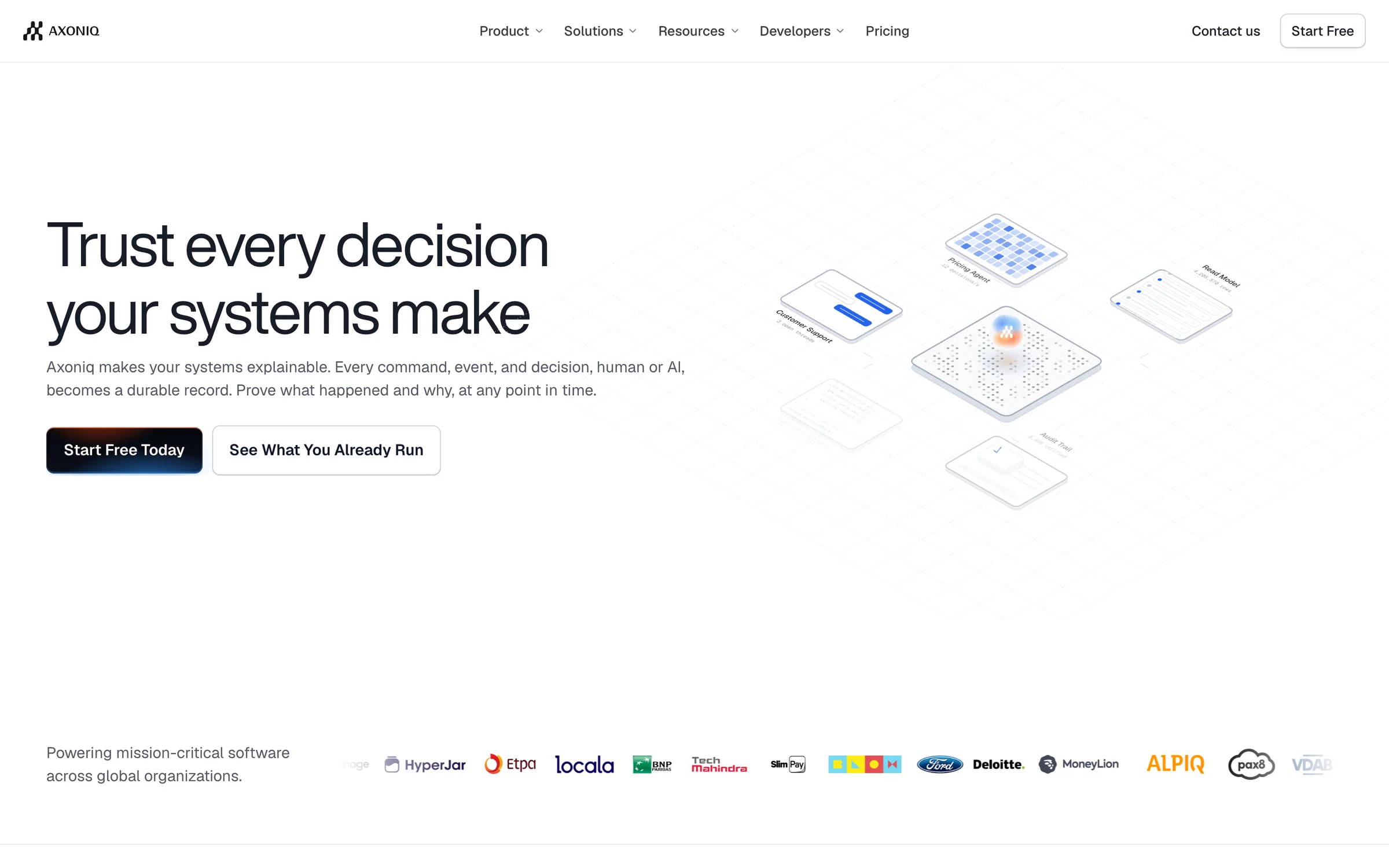
The old home page sold a framework to developers: a teal headline about AI-native enterprise applications, download counters, a download button, three blue buttons in the navigation and a conference banner. The new one makes one claim, for the company and not just the framework: Axoniq makes systems explainable. Every command, event and decision, human or AI, becomes a durable record, so a team can prove what happened and why. Two buttons, one illustration, the customers underneath, in black, white and grey with orange kept for emphasis.
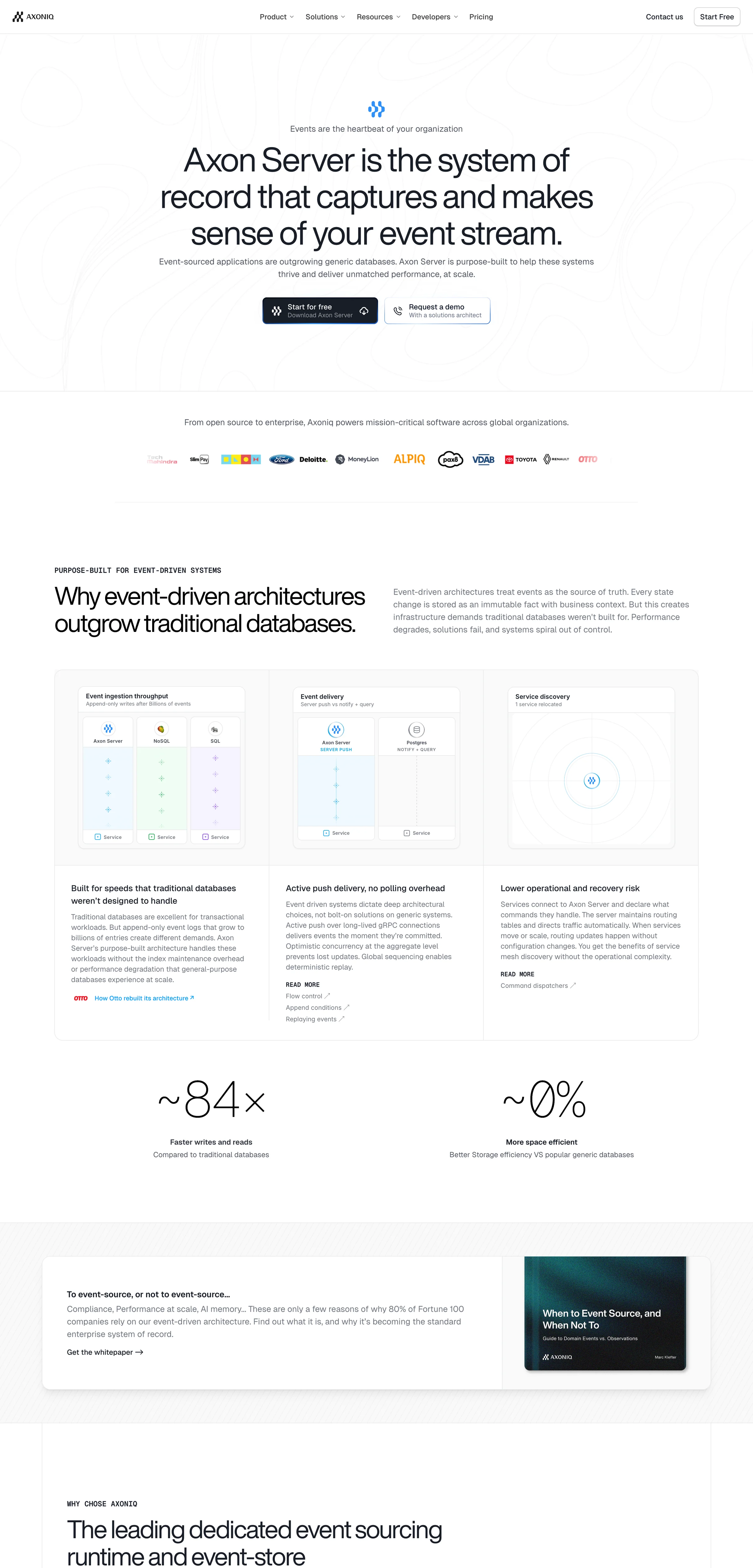
The Axon Server page shows the model at work. The old page led with what the product is, zero-configuration message routing and event storage, and a release note. The new one leads with the frame: events are the heartbeat of your organisation, and Axon Server is the system of record that captures them and makes sense of them. The line under it is the manifesto from the model, nearly word for word: event-sourced applications are outgrowing generic databases.
A shader that draws every blog cover
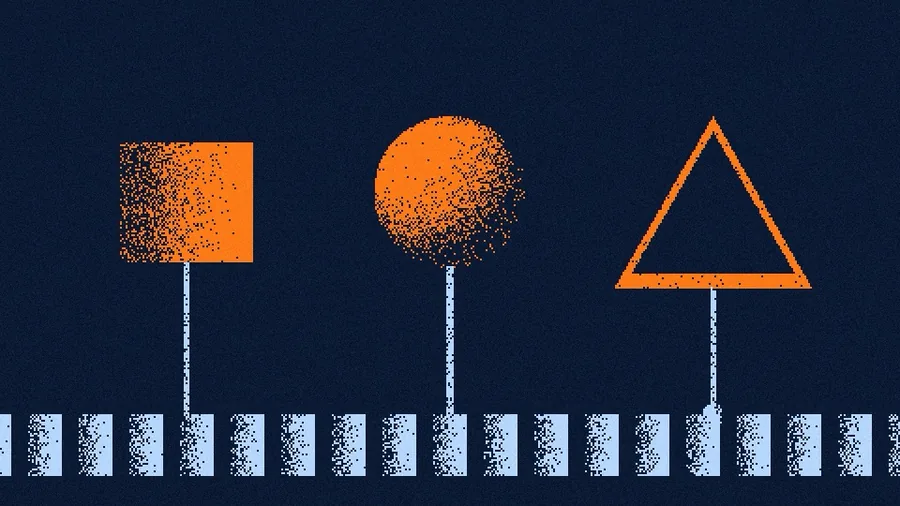
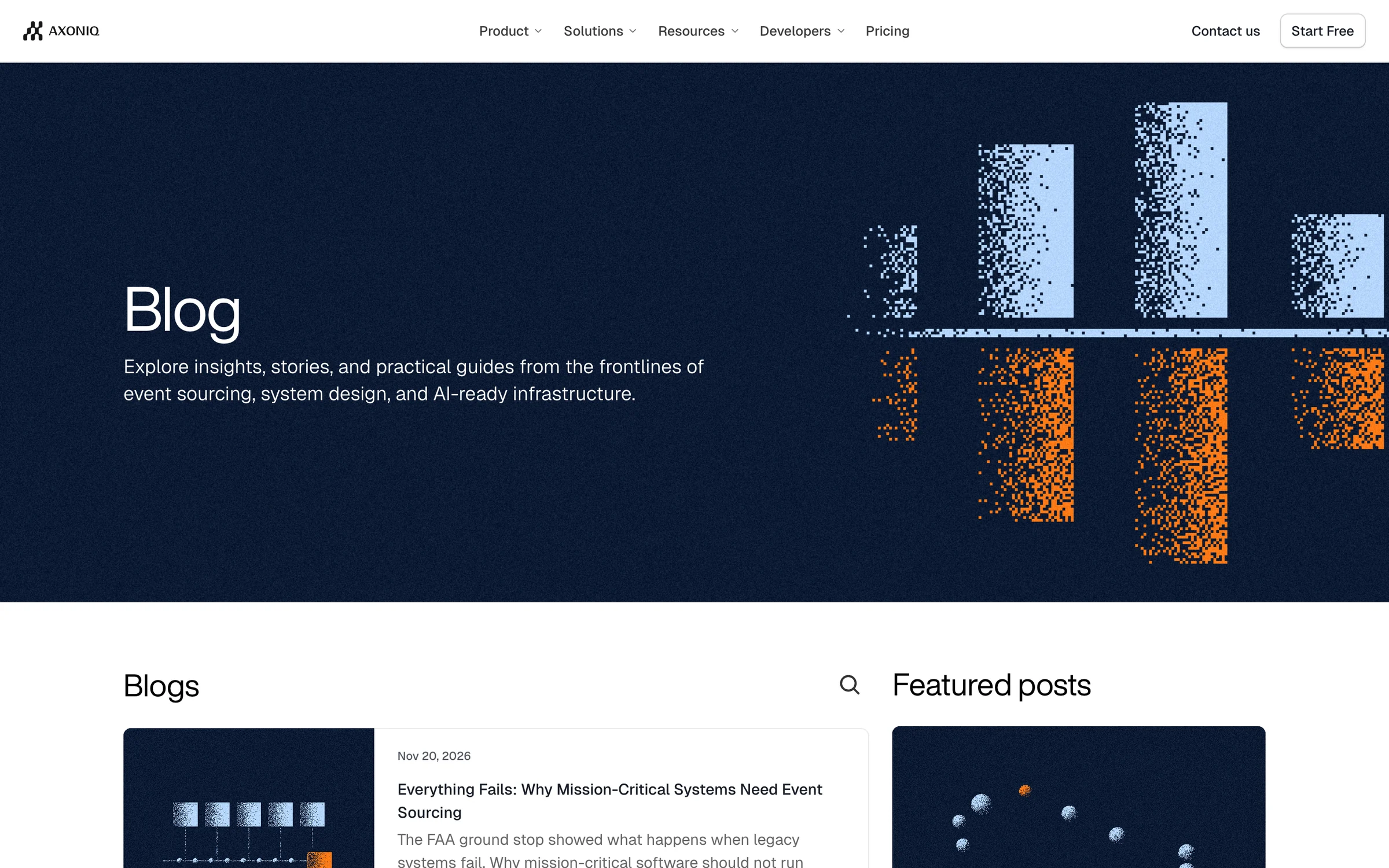
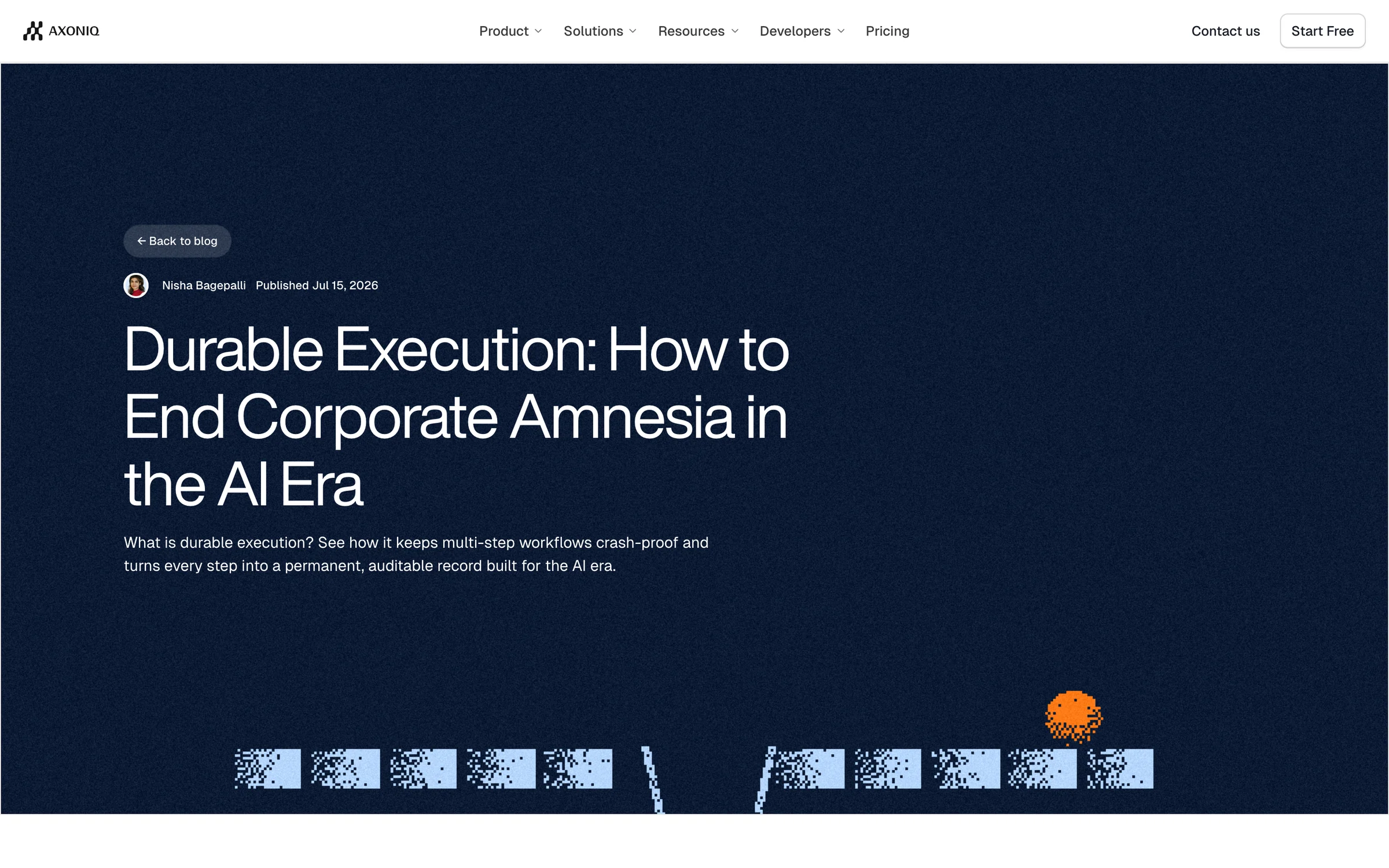
Blog covers are where a company's look goes to die. Every post needs an image, nobody has time to make one, and the stock photo of a glowing network wins. So on axoniq.io one fragment shader draws them all. It prints two ink plates, orange and blue, dithered onto paper like a risograph. Each concept page and each blog post gets its own drawing, one idea per image, in motion: orange is the subject, blue is the structure.
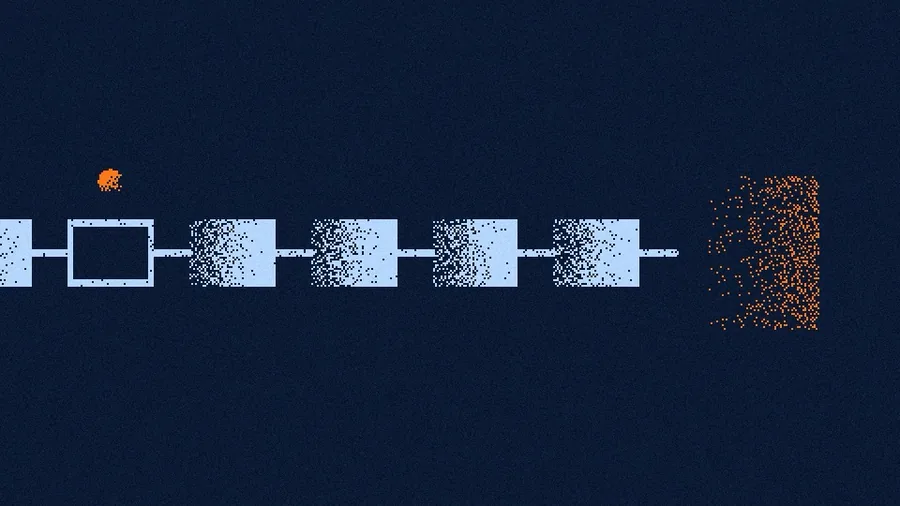
The drawing at the top of this page is live, the shader the site runs, in the version the brand library keeps. It's Sediment, the cover of the Axon Server 2026.1.0 release post: segments snake down through storage tiers, fainter at each level, while the head keeps writing on top.
The shader holds six concept drawings and sixty blog drawings, each a few lines of maths with its own little story: a chain with one hollow link, a marker that climbs and resumes from the same step, rule sheets that sink as new ones arrive. The drawings are written for the posts they cover, so the image says what the post says.
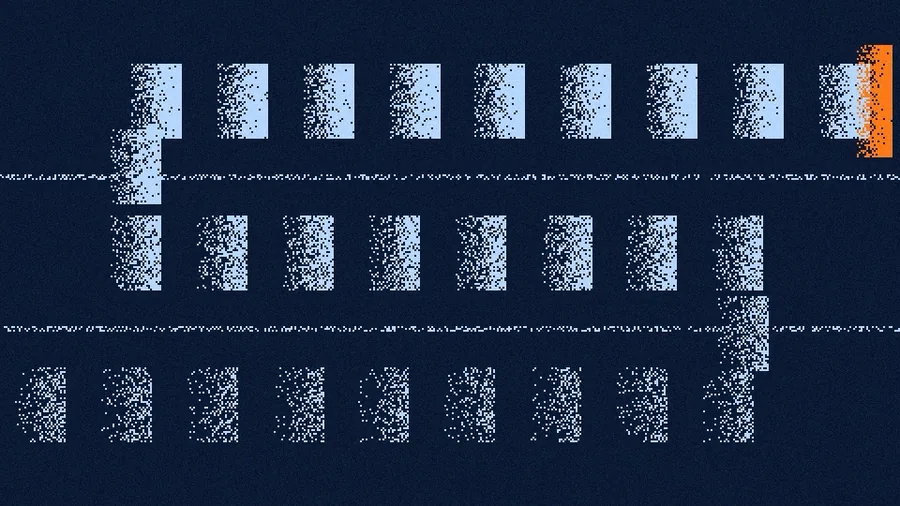
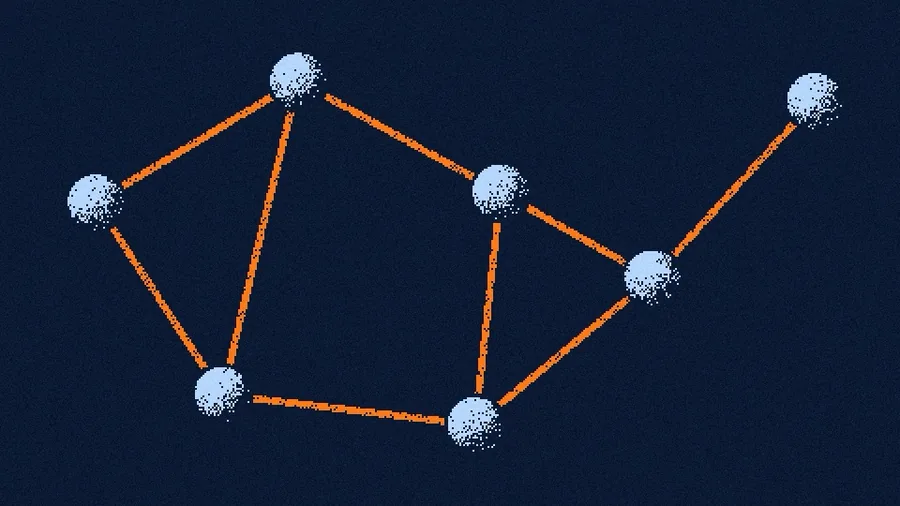

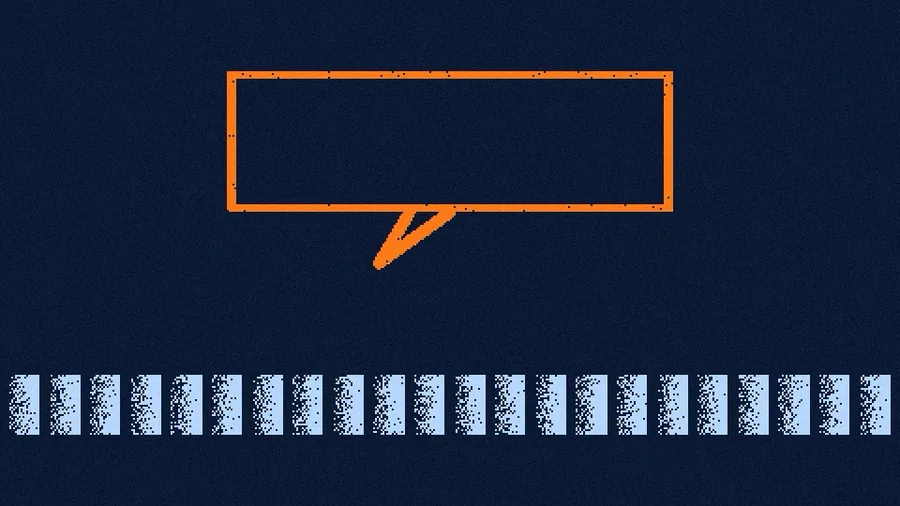

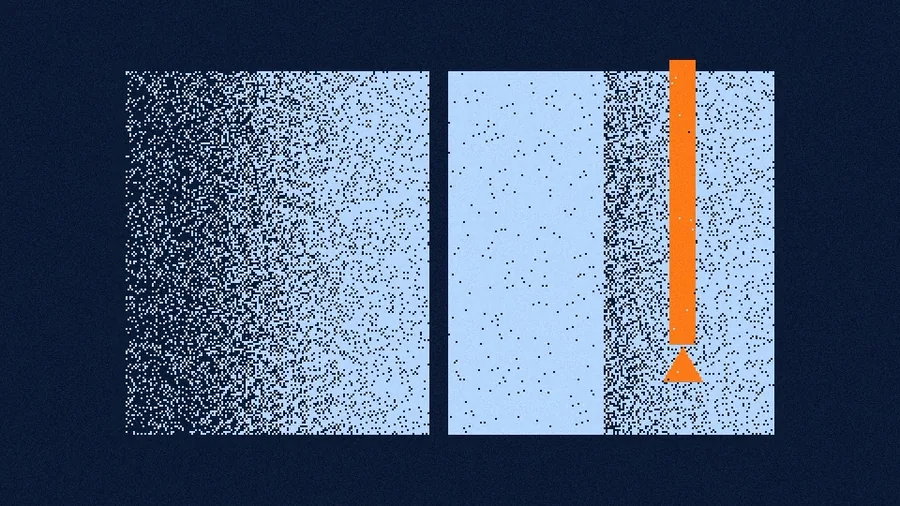
On the site the shader sits behind the blog's header and behind every post, with the top knocked out so the title stays readable.
3. Two videos
This autumn I started making short explainers for the people who sign off on the work: managers, executives, the business side. Not developer content, on purpose.
Workflows: autosave for your business
Axoniq Workflows is durable execution: a long business process survives restarts, deploys and crashes, and never runs a step twice. Engineers get that in one sentence. A finance director doesn't, so the video had to find pictures.
Before writing a word I built a bank of analogies and scored each one on four tests. Lived, not heard of: the viewer went through it this year. Mechanically honest: an engineer watching would nod, not wince. Carries the reassurance: the interruption feels ordinary and the fix feels boring. Drawable: it animates in the flat white style in under ten seconds. The forced laptop update at 3 am that eats two days of a report passed all four, and so did autosave and version history. Together they became the spine: everyone has lost work to a restart, everyone moved to a tool that autosaves, and Workflows is autosave for your business processes, with a version history in your words.
The video is code. It's a Remotion project, one React file per scene, in Axoniq's tokens and type, with an AI narrator from ElevenLabs recorded in one continuous take and captions timed to the real words. Changing a line of the script re-times the whole cut. It's the first of a series, one pain that durable execution solves per video.
Clarity, with our CEO
Axoniq Clarity reads a company's old systems and shows what should stay and what needs to be rebuilt, then proves the rebuild in a sandbox beside production. I wrote the script and the story, then edited and produced the video, presented by Jessica Reeves, our CEO. The first cuts used a placeholder voice. When Jessica recorded her own, the audio fought us, so I rebuilt the piece around her on camera, with captions, in a format I'd made for an earlier video. It went out on LinkedIn and YouTube on 18 November 2026.
4. The brand book
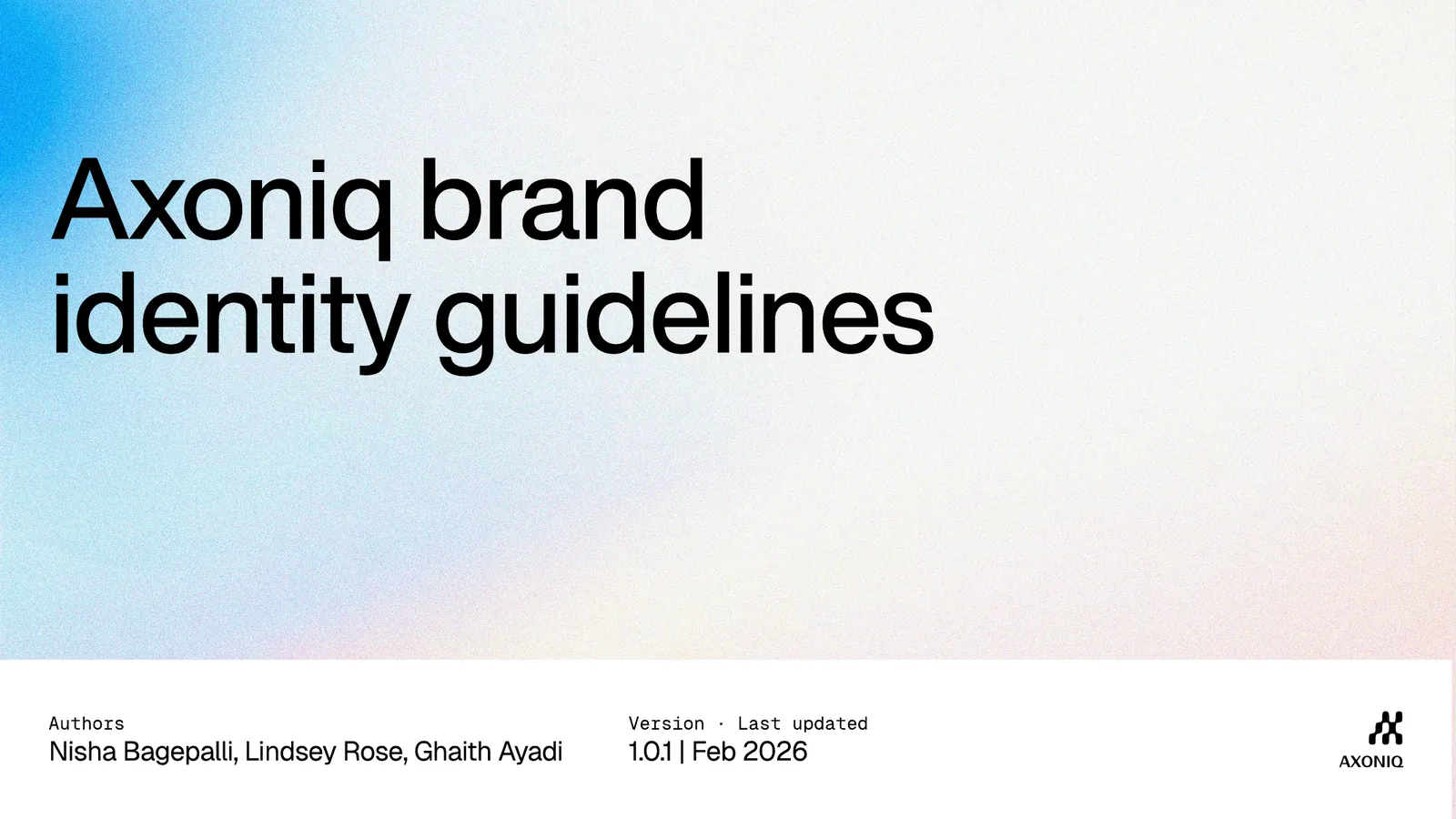
Version 1.0.1 of the Axoniq brand guidelines came out in February 2026, written with Nisha Bagepalli and Lindsey Rose. It covers the logo and the product logos, avatars, colour, type, backdrops, photography, icons, decorative items and how we write. The product logos are one system: each sub-brand (Platform, Framework, Server, Insights, Discuss, Academy) is a variation of the same pixel grid, so any one of them still reads as Axoniq when it's used on its own.
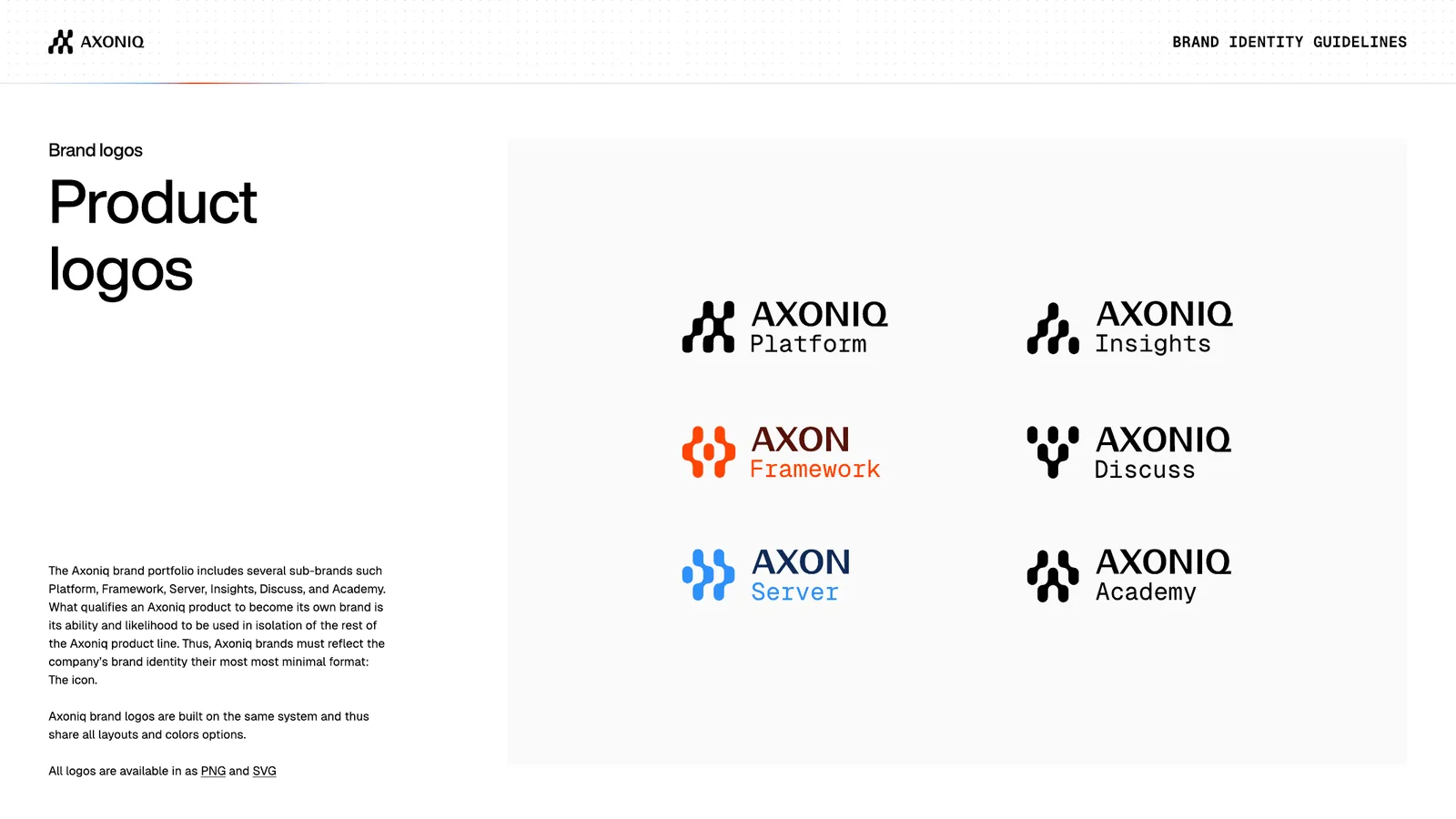
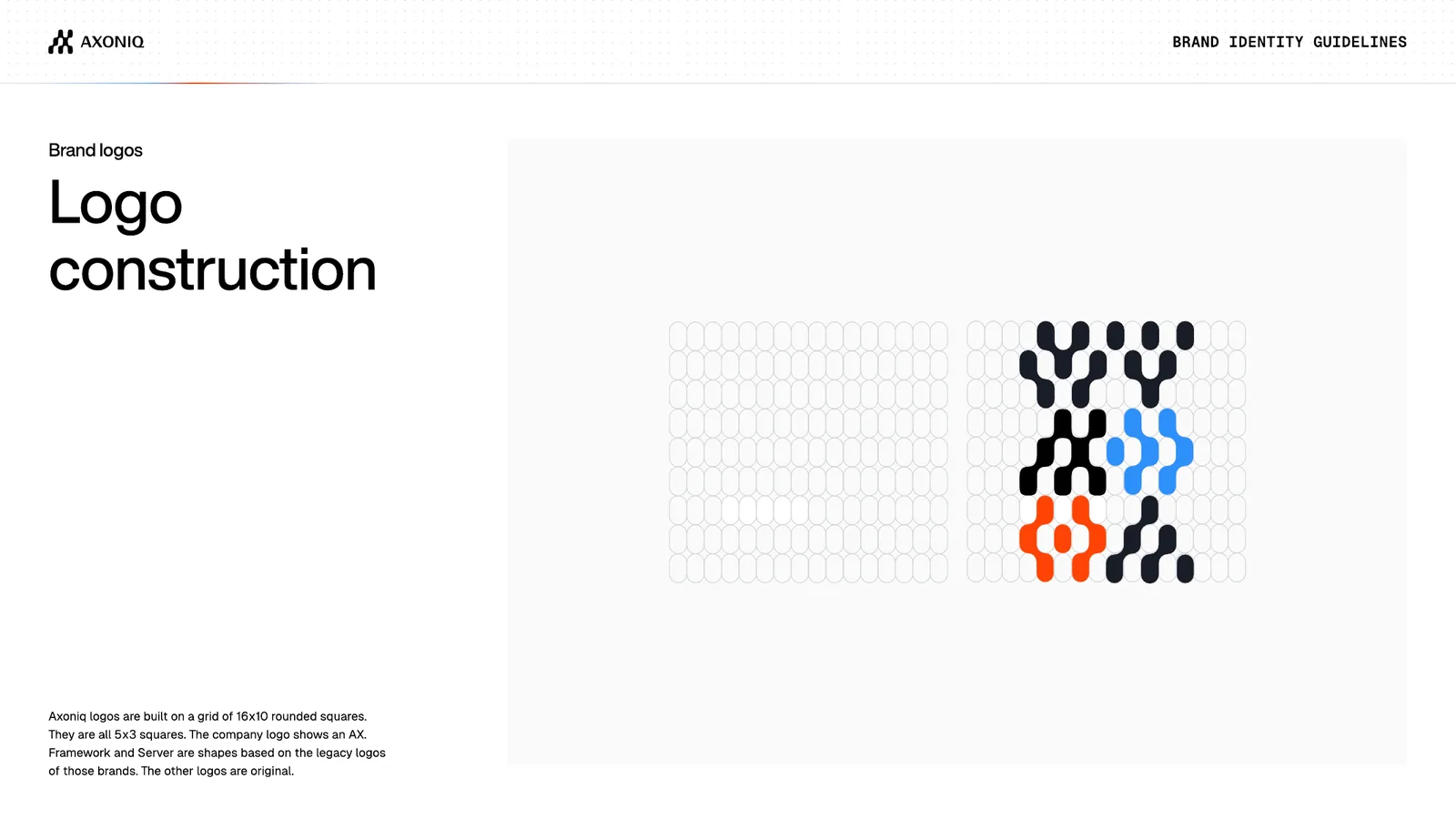
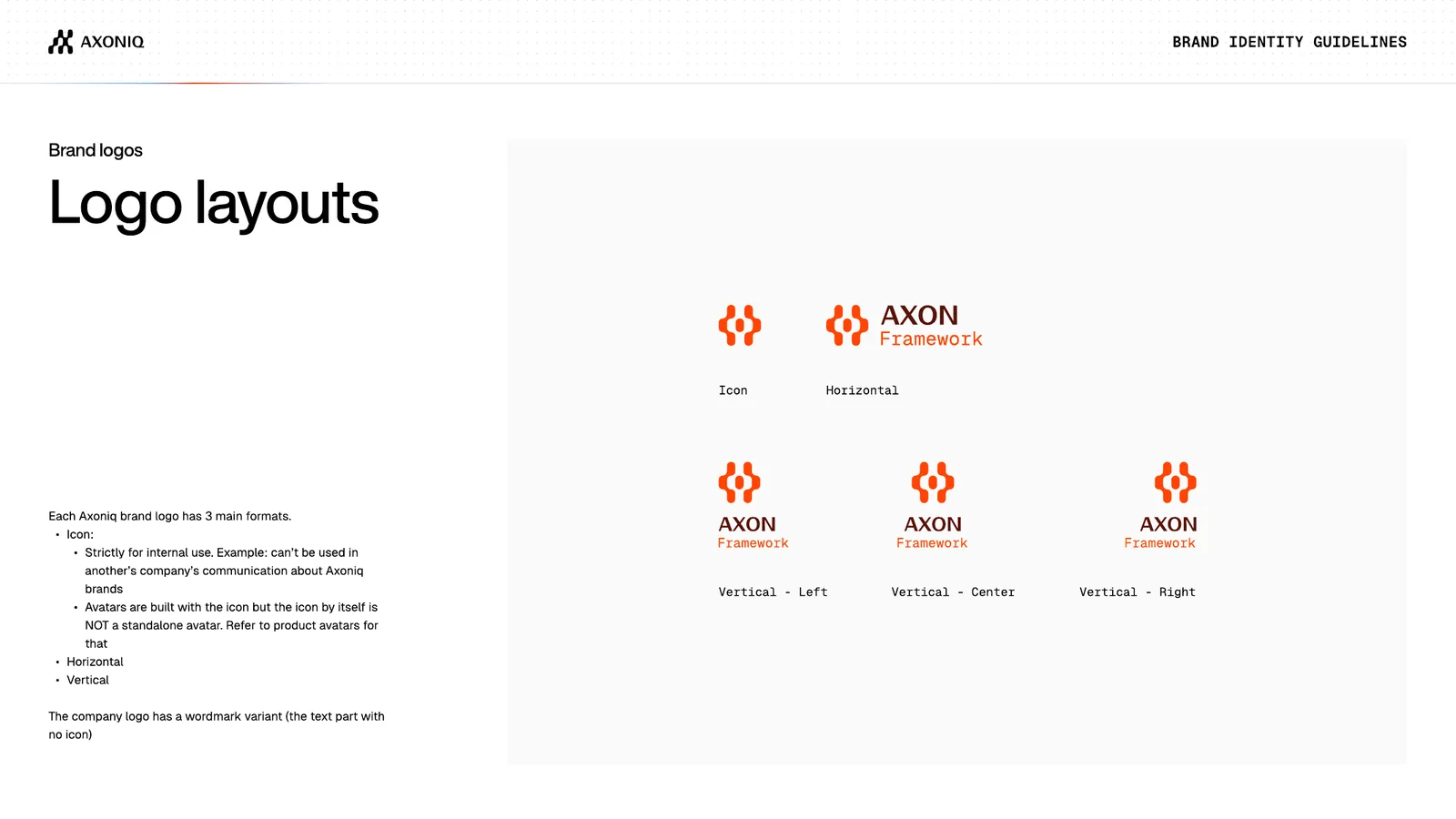
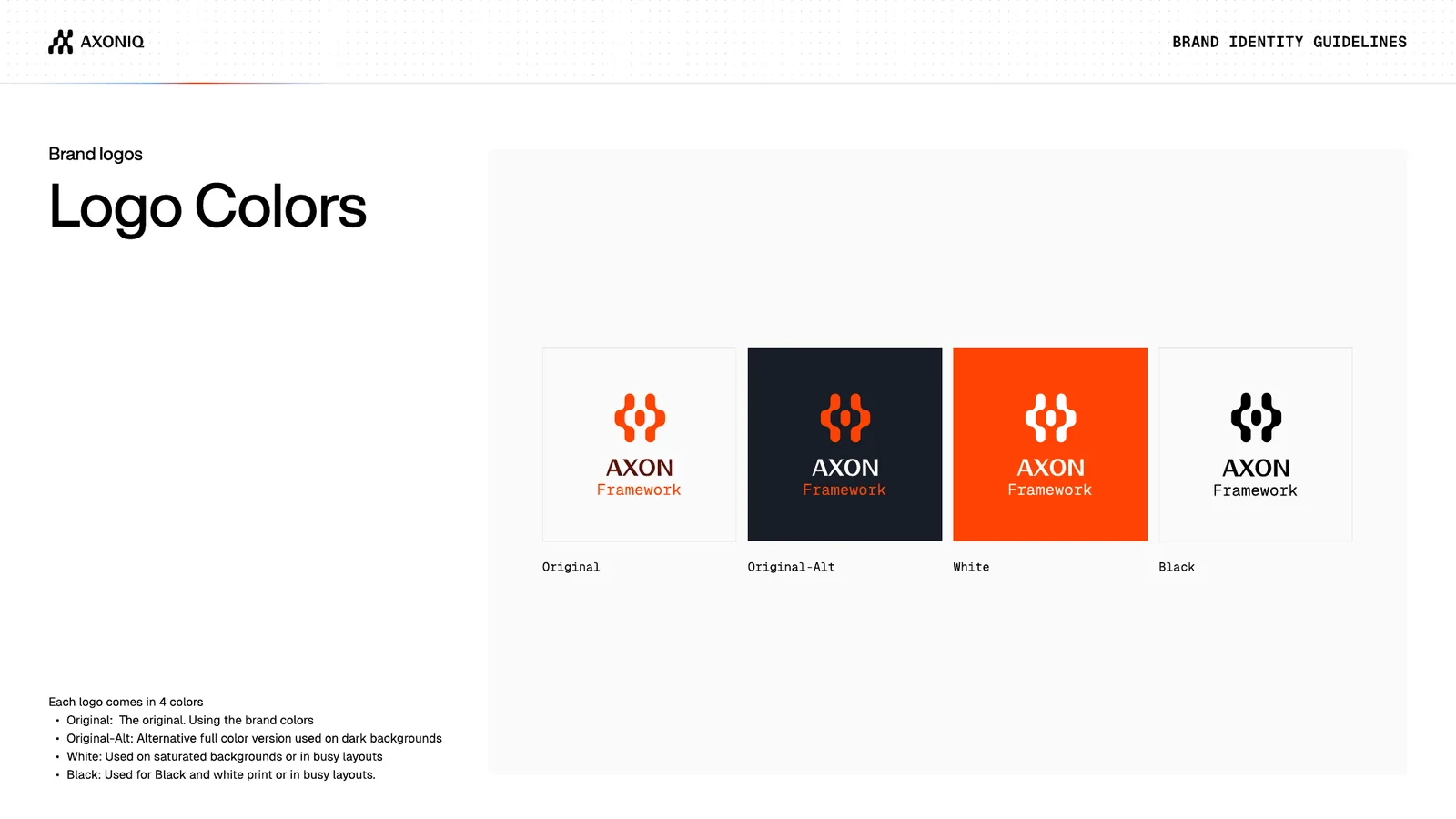
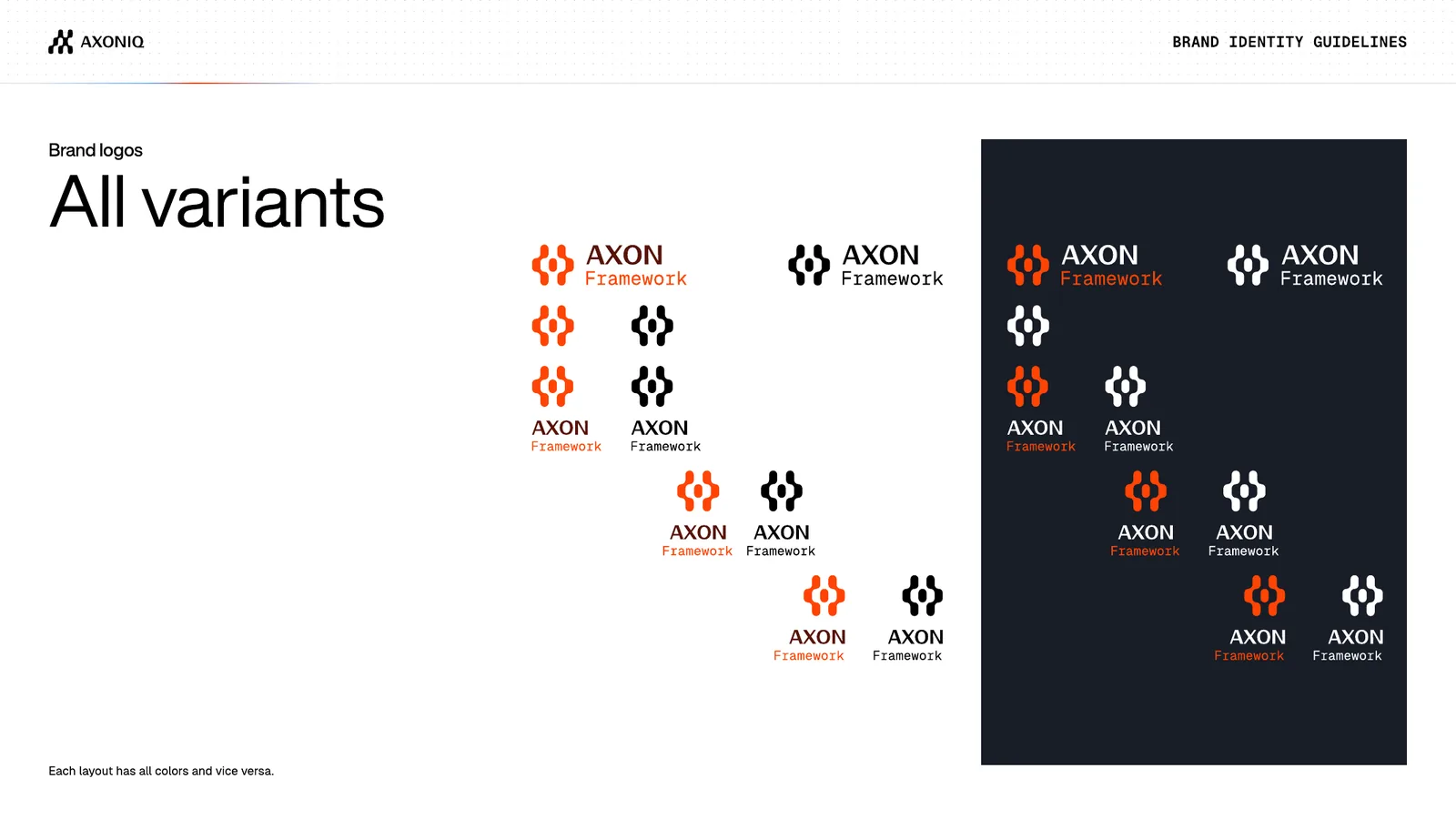
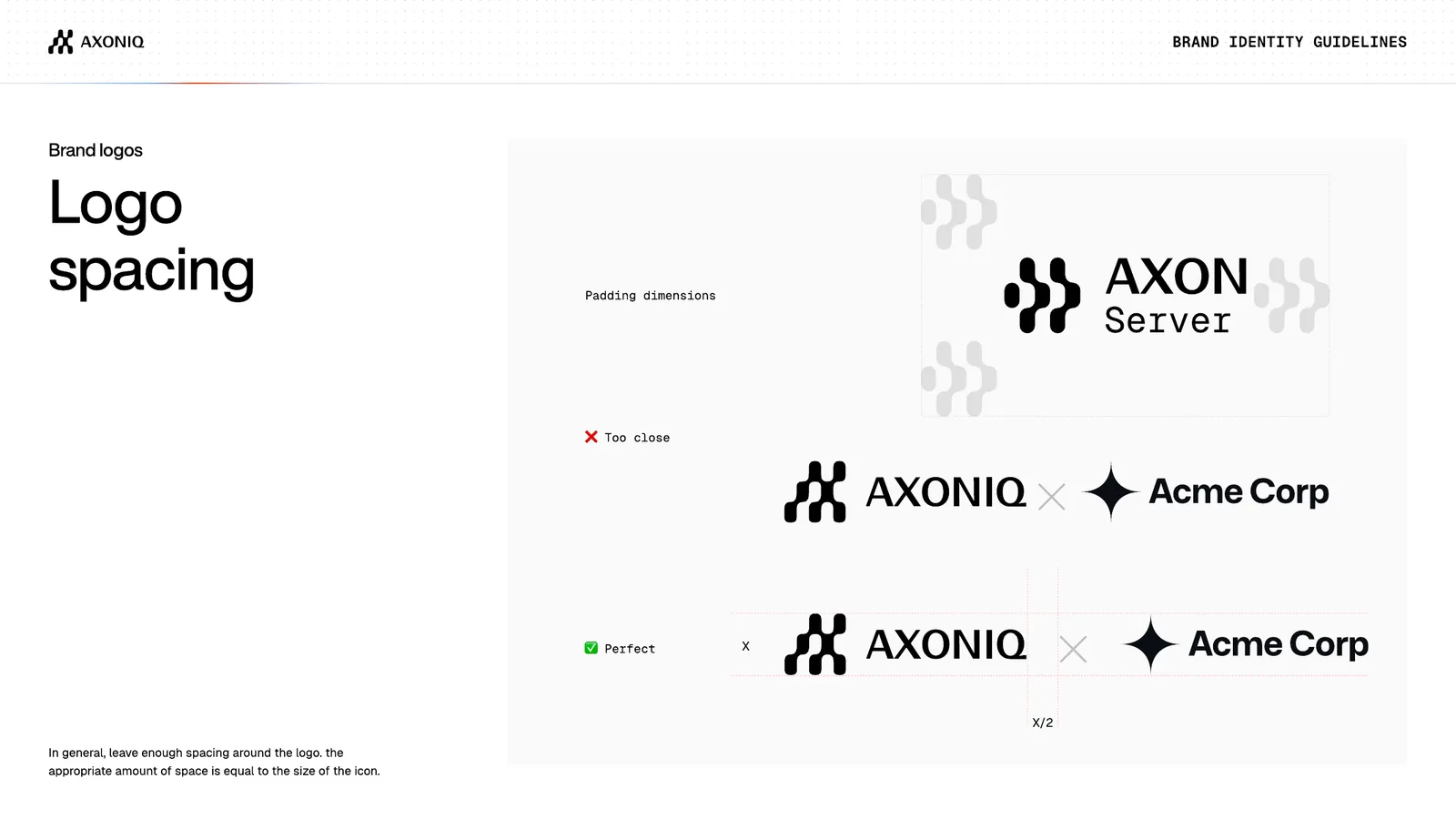
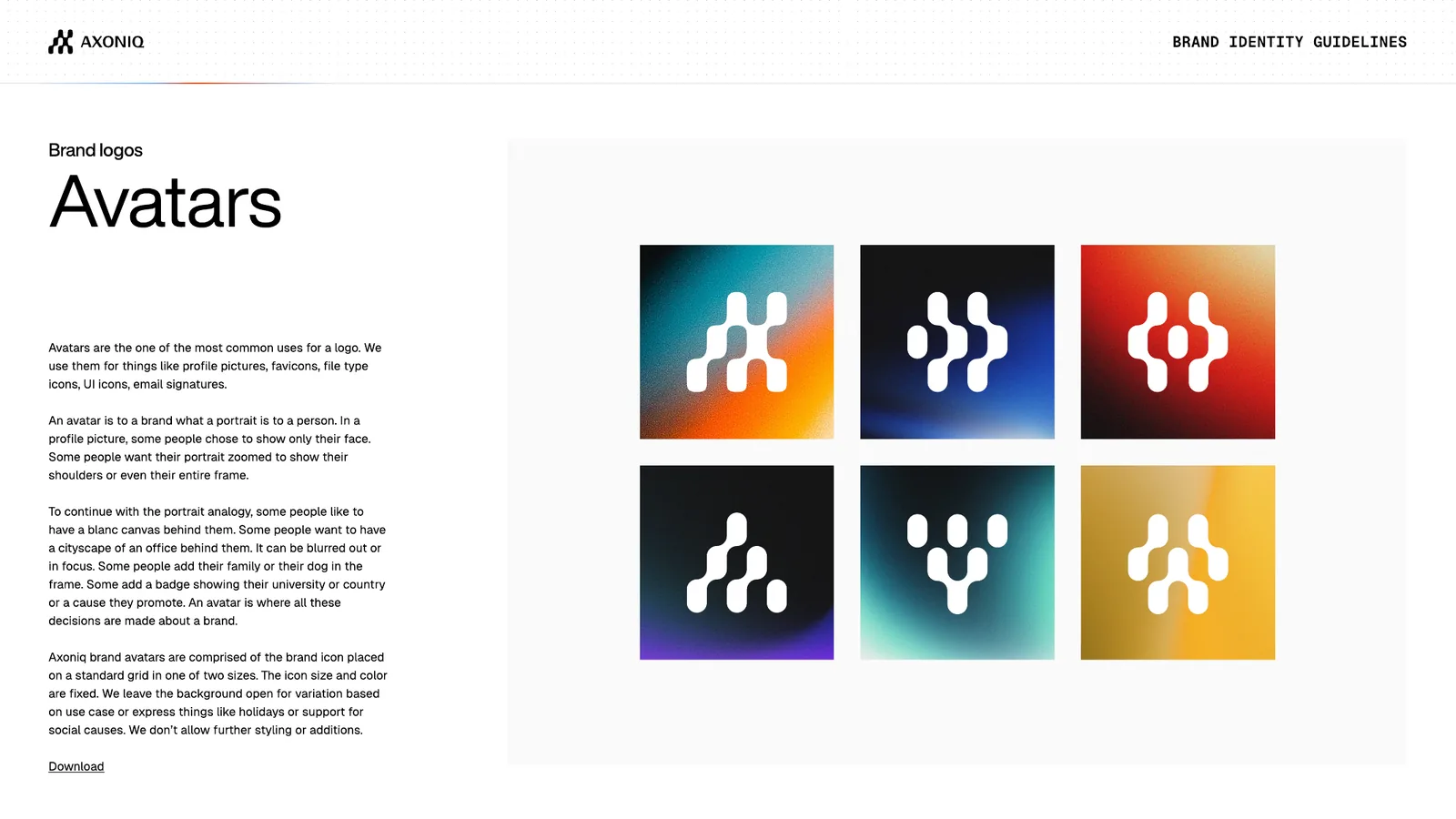
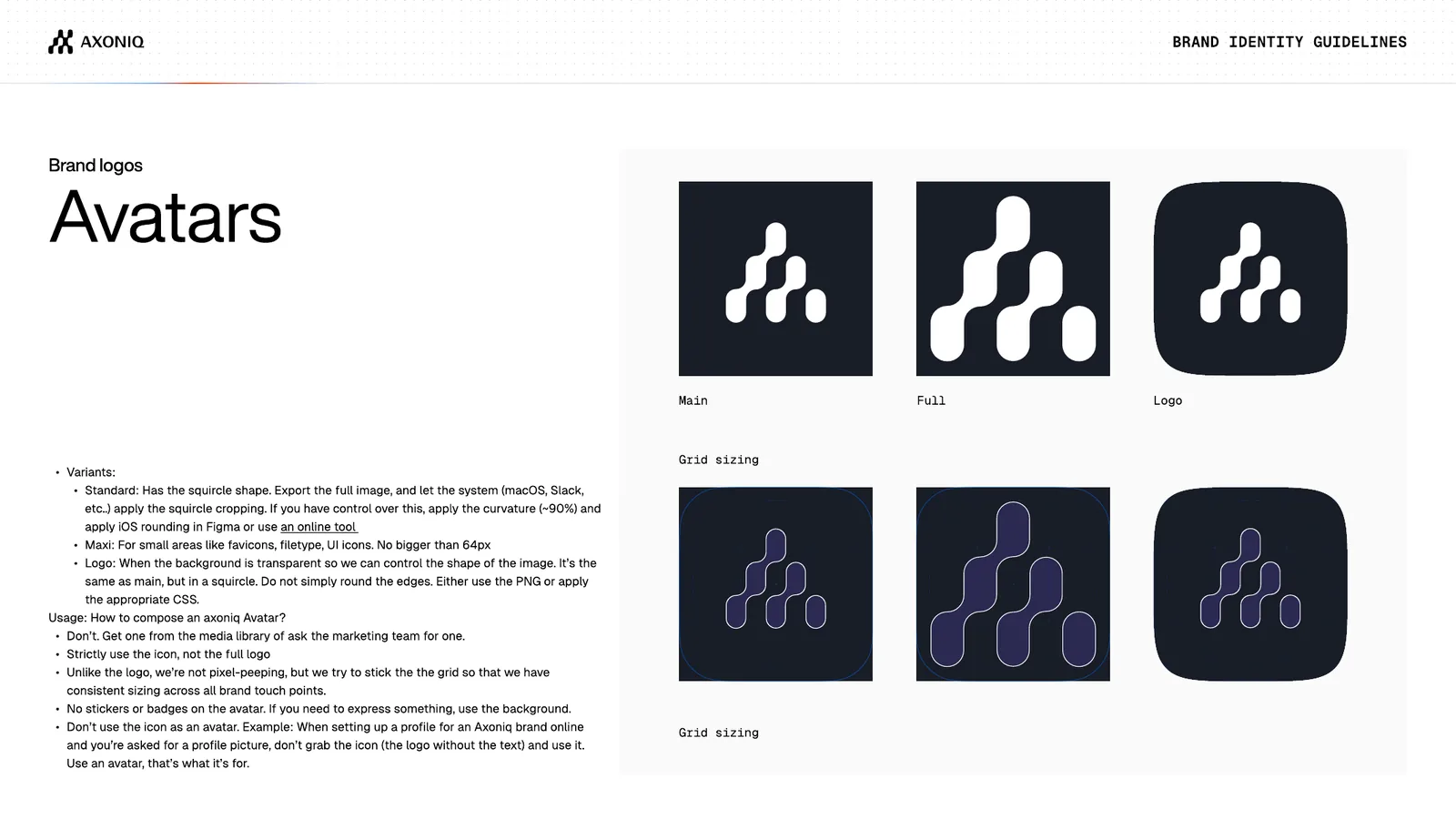
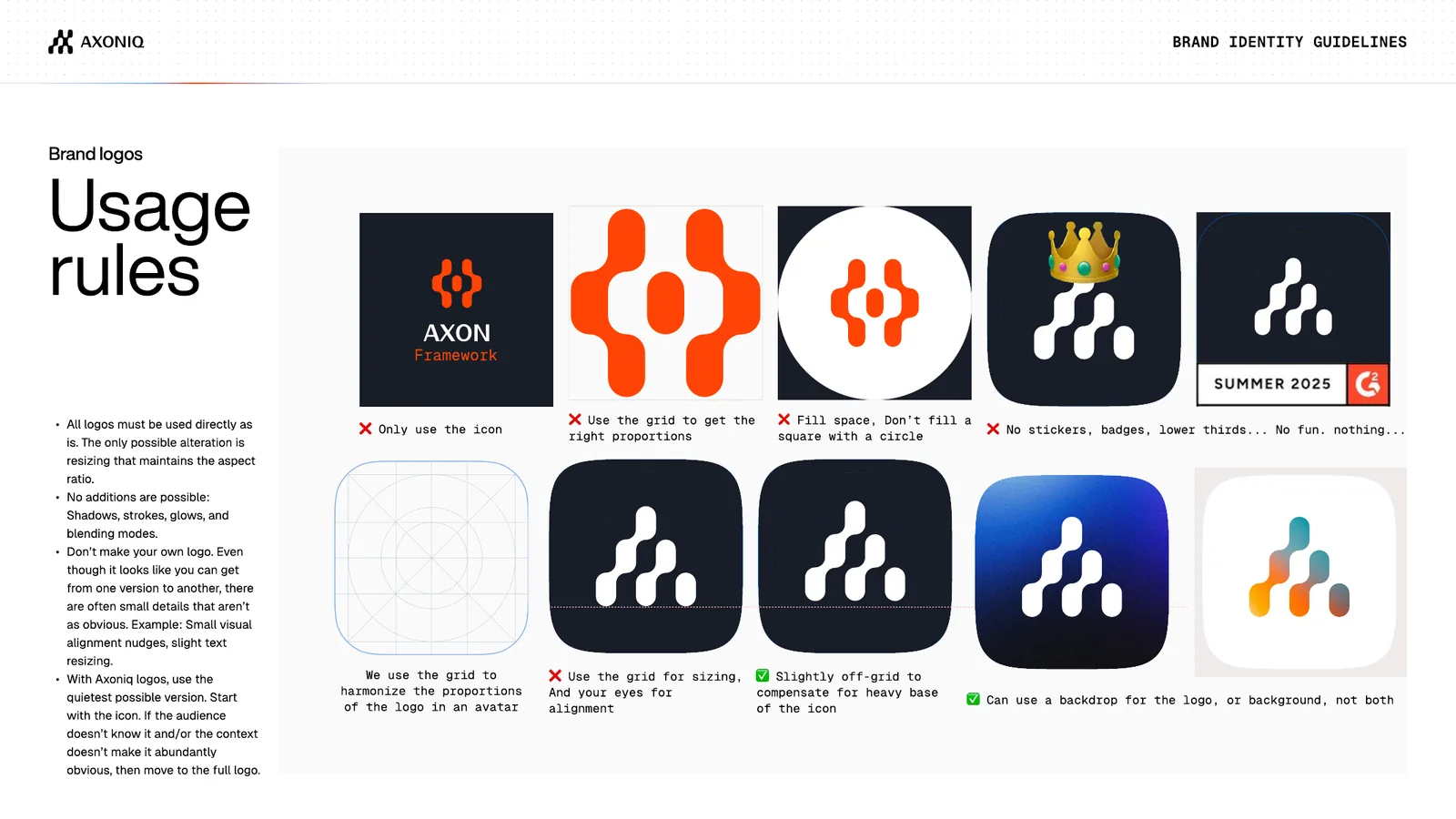
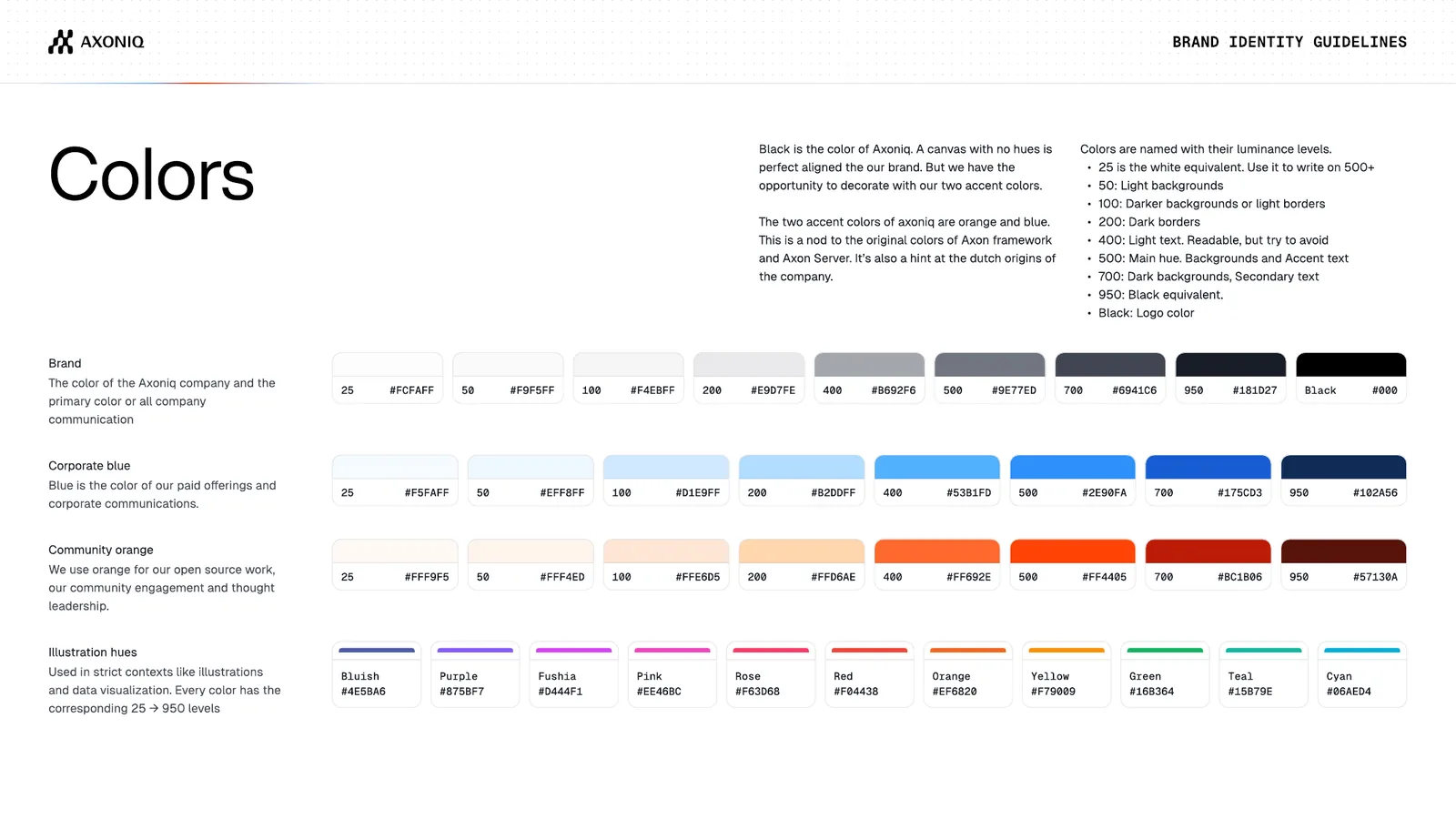
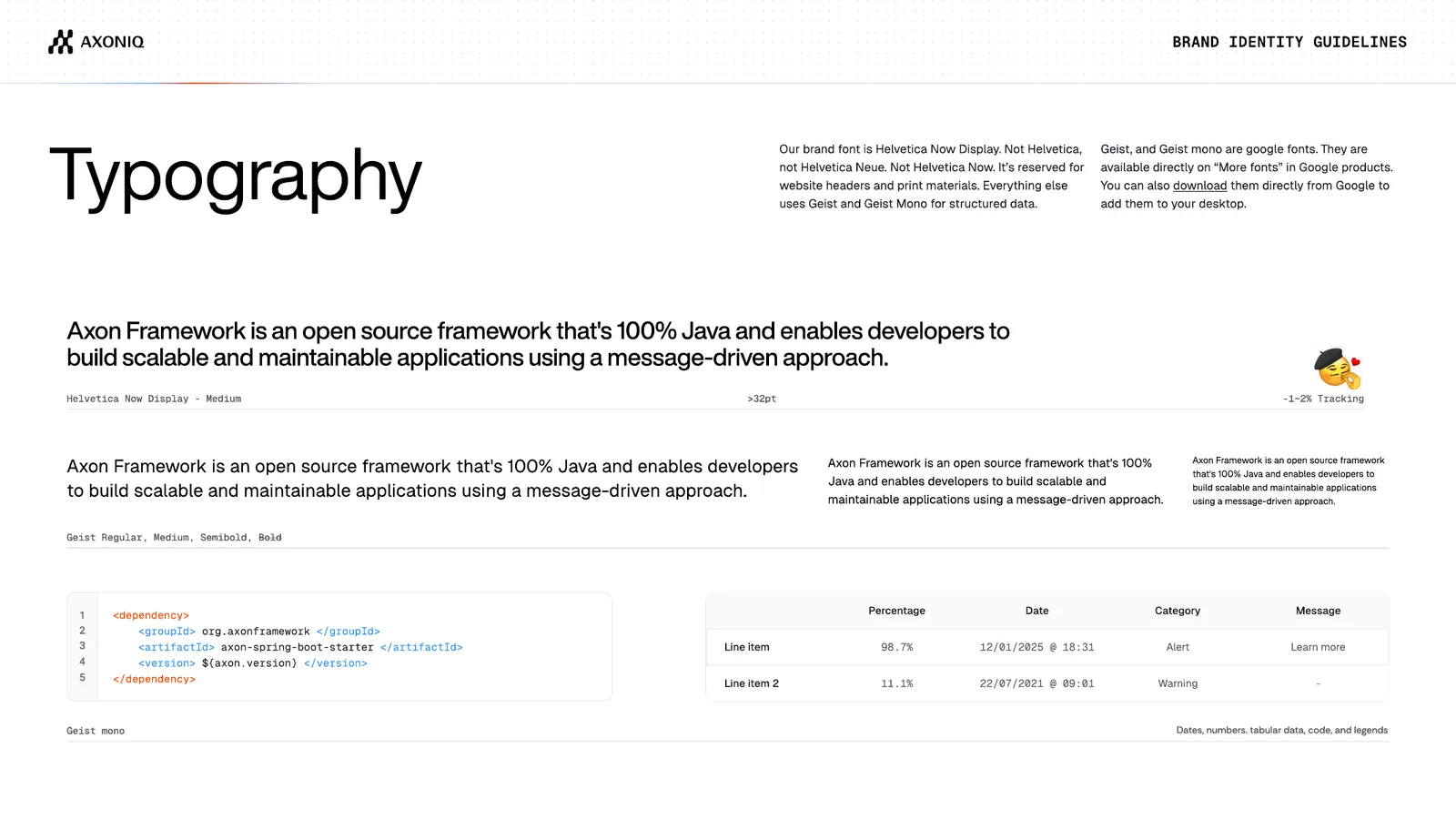
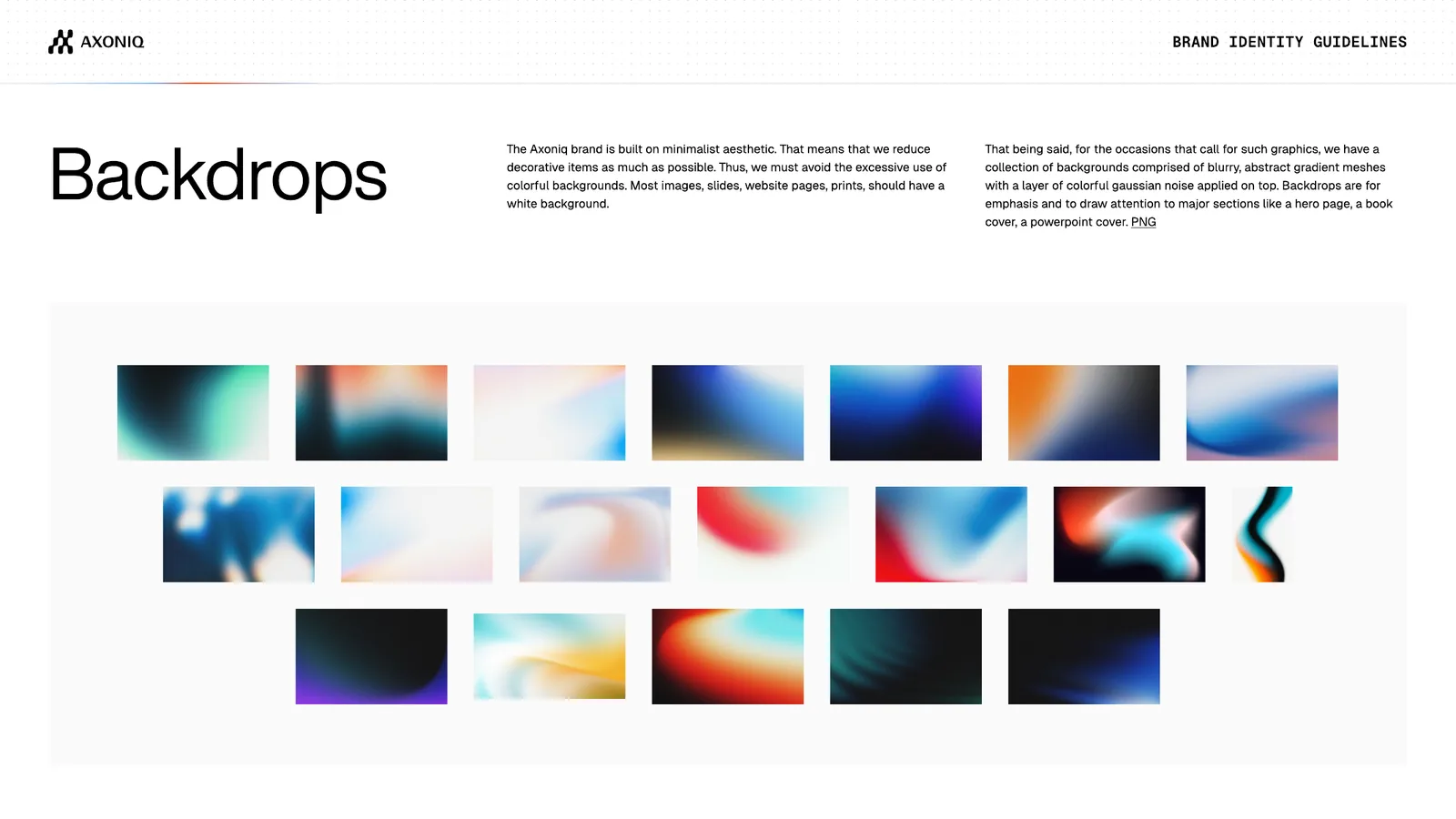
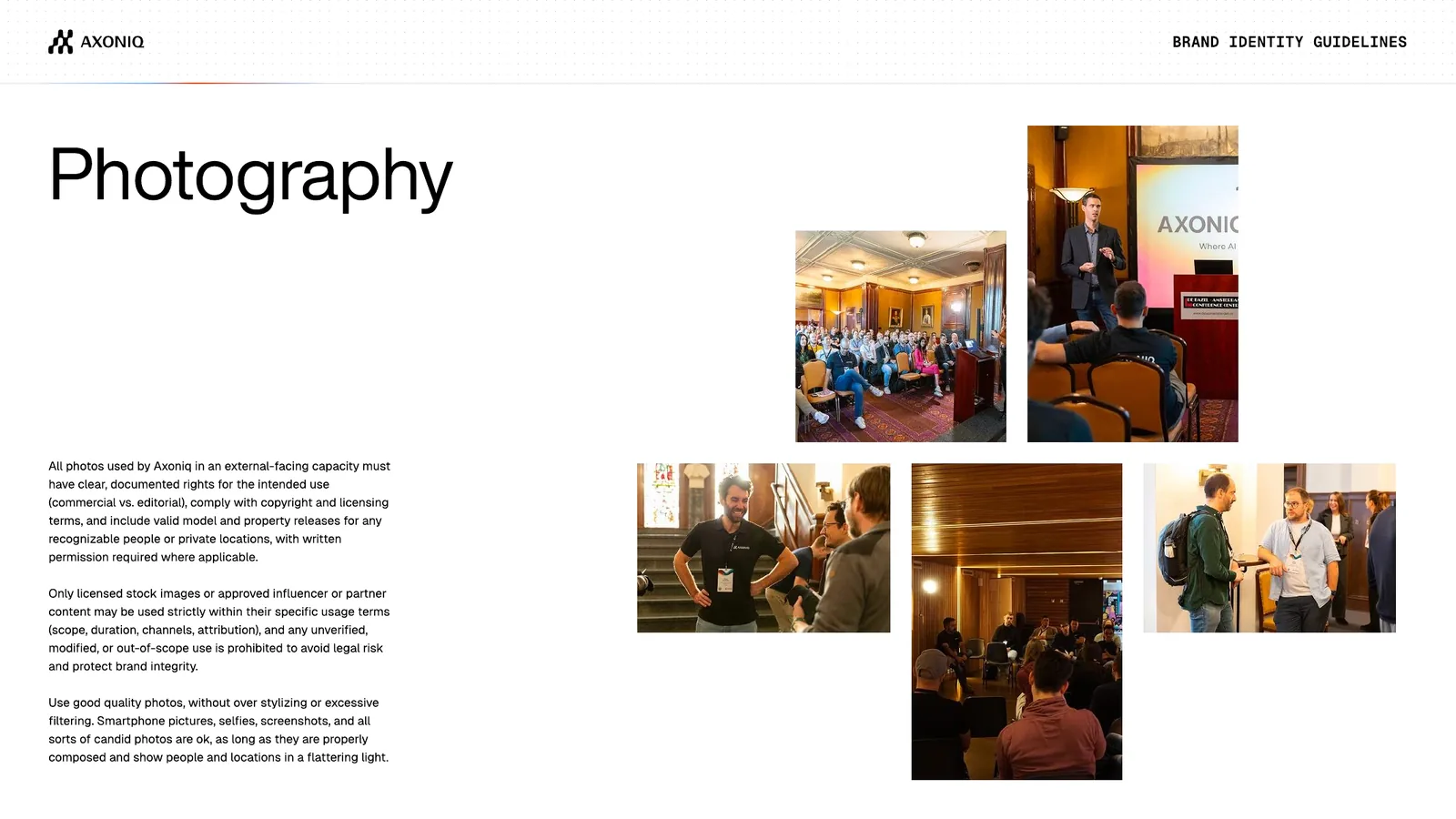
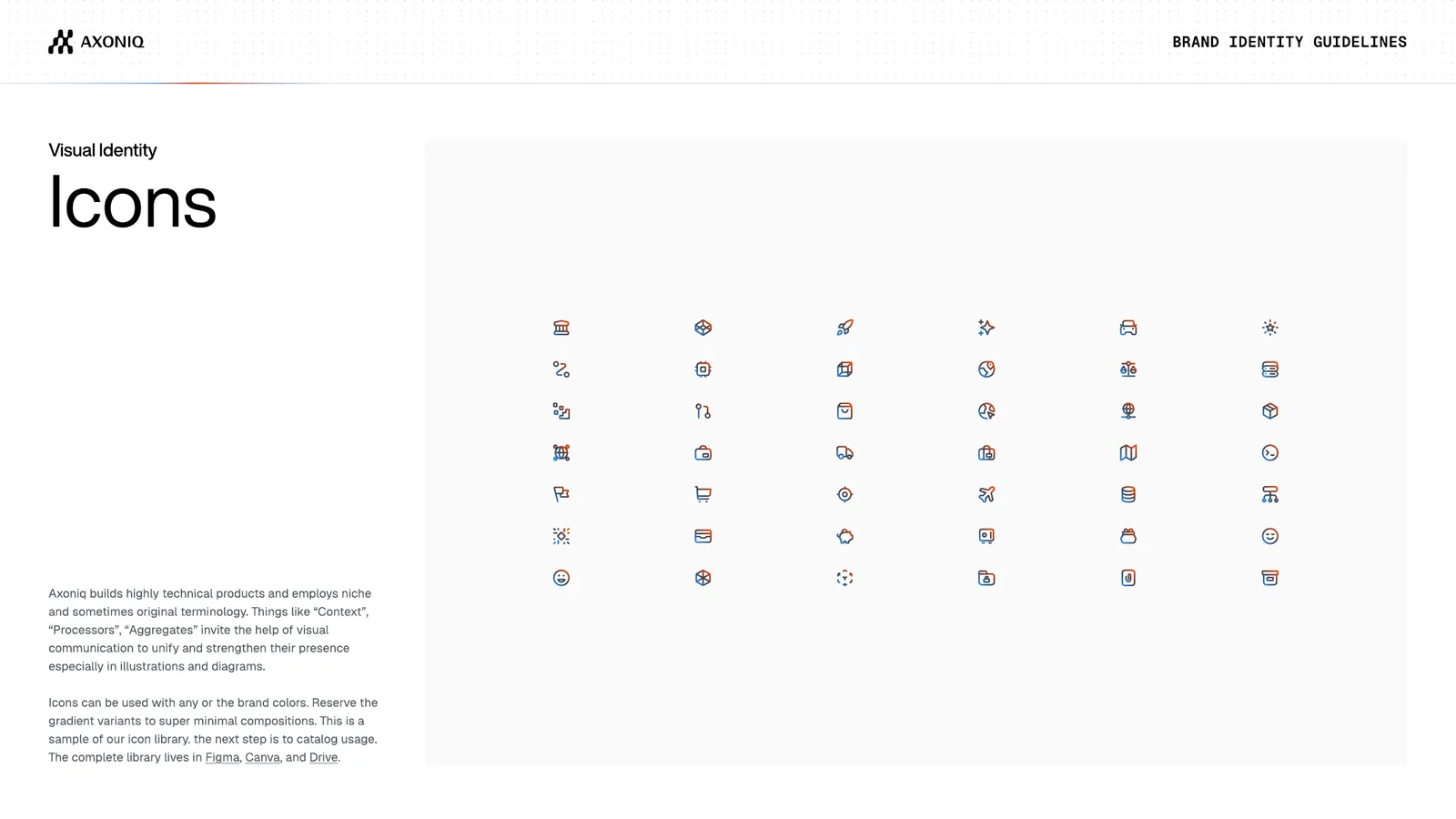
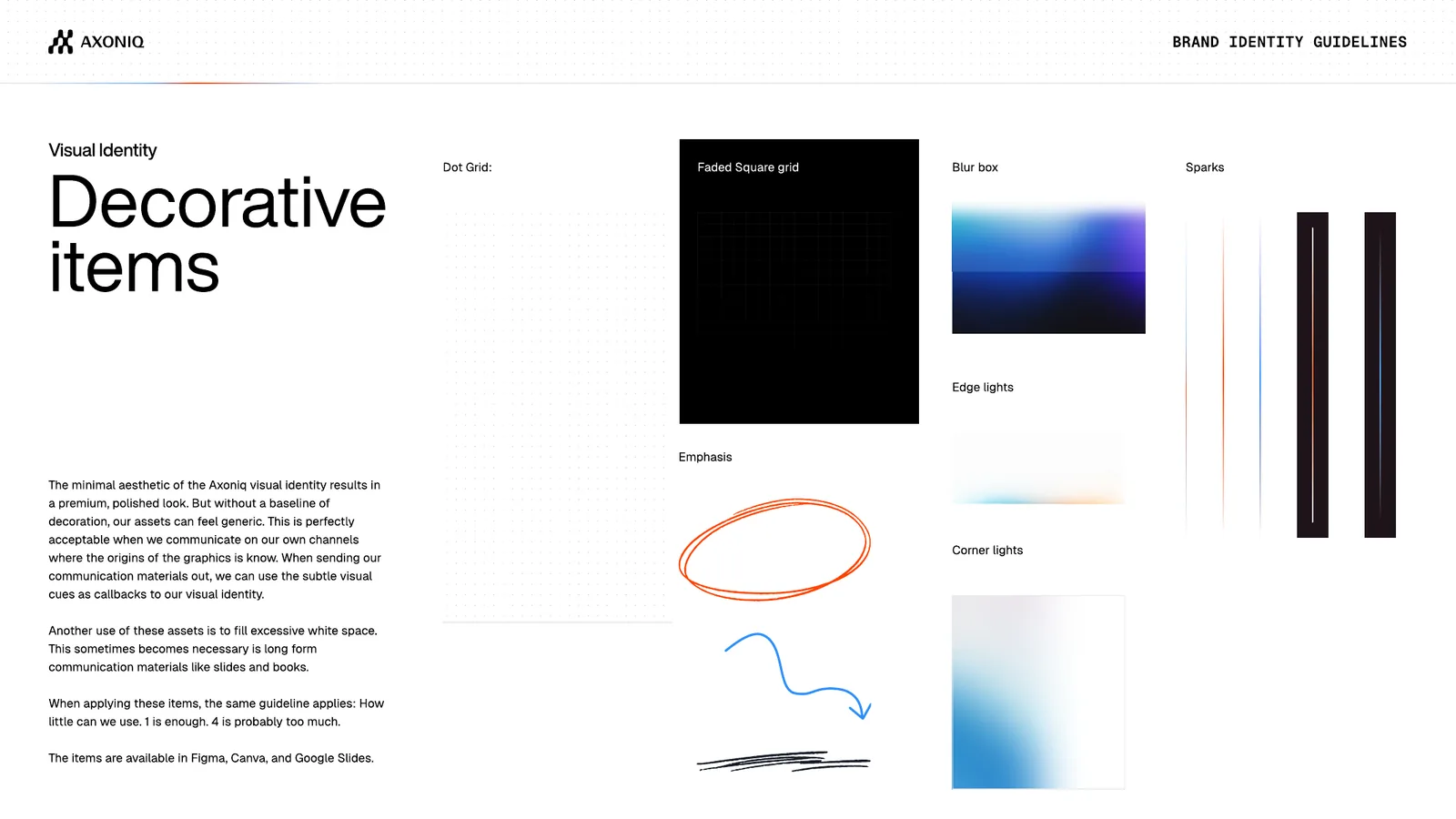
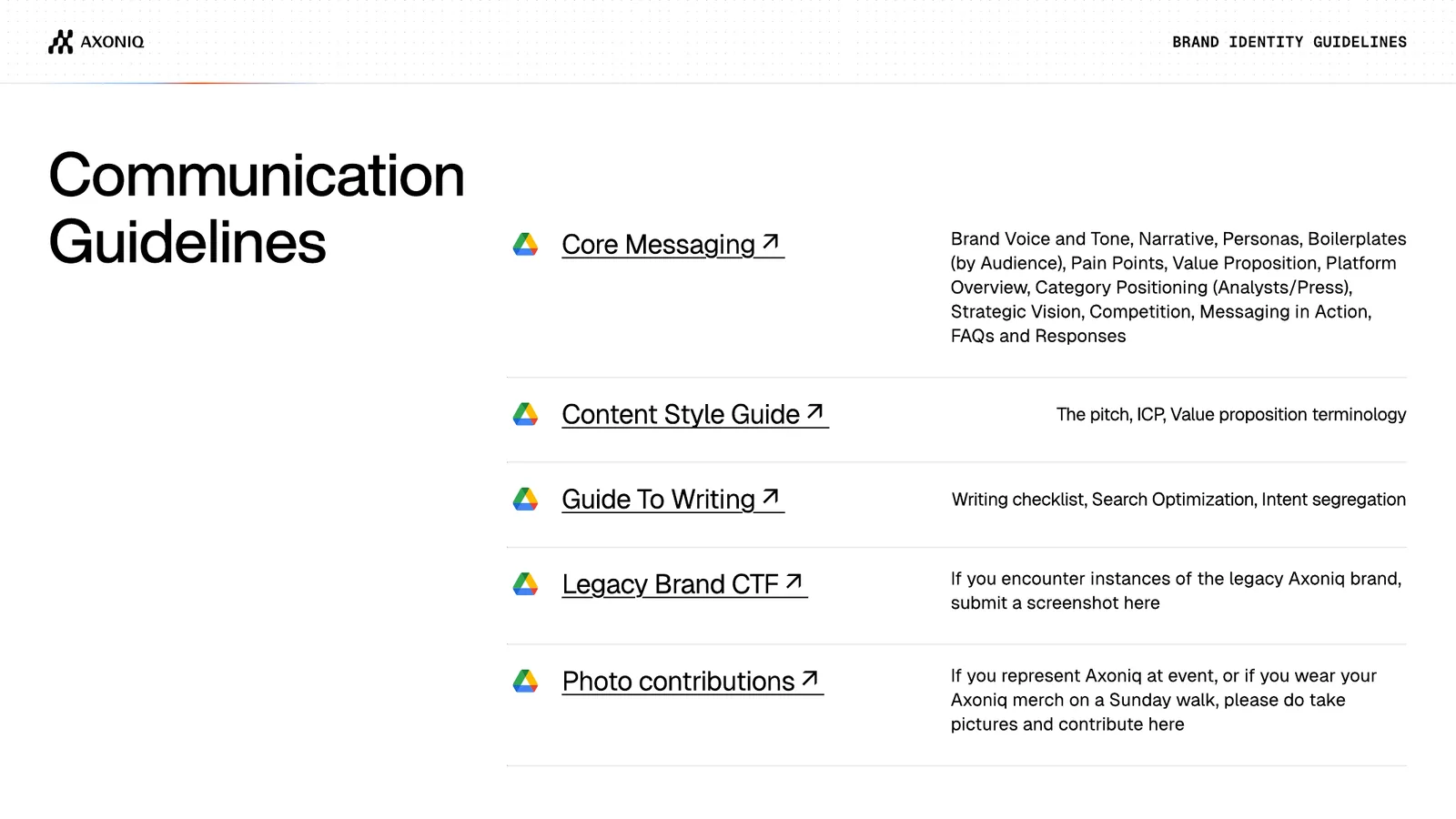
The PDF was the start. The guidelines now live in BrandZone, a site instead of a document, styled with the platform app's own design tokens, with every logo and backdrop downloadable and a read-only connector so Claude can check copy against the rules.
5. Two new illustration styles
The brand had one illustration system, Van Gogh: animated product illustrations written as React components, for showing what the product does on a screen. BrandZone, the brand library, now holds two more styles, one for ideas and one for places.
Riso, for ideas
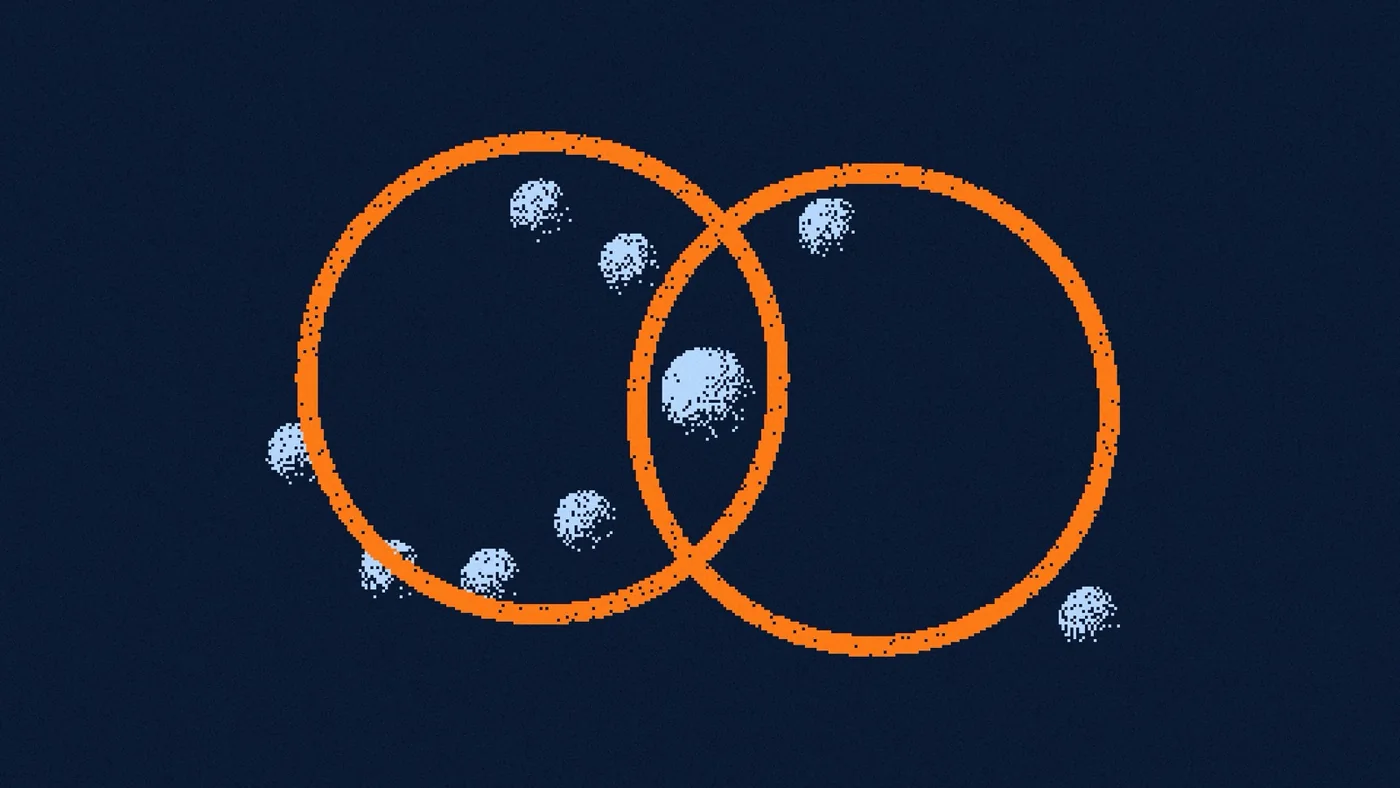
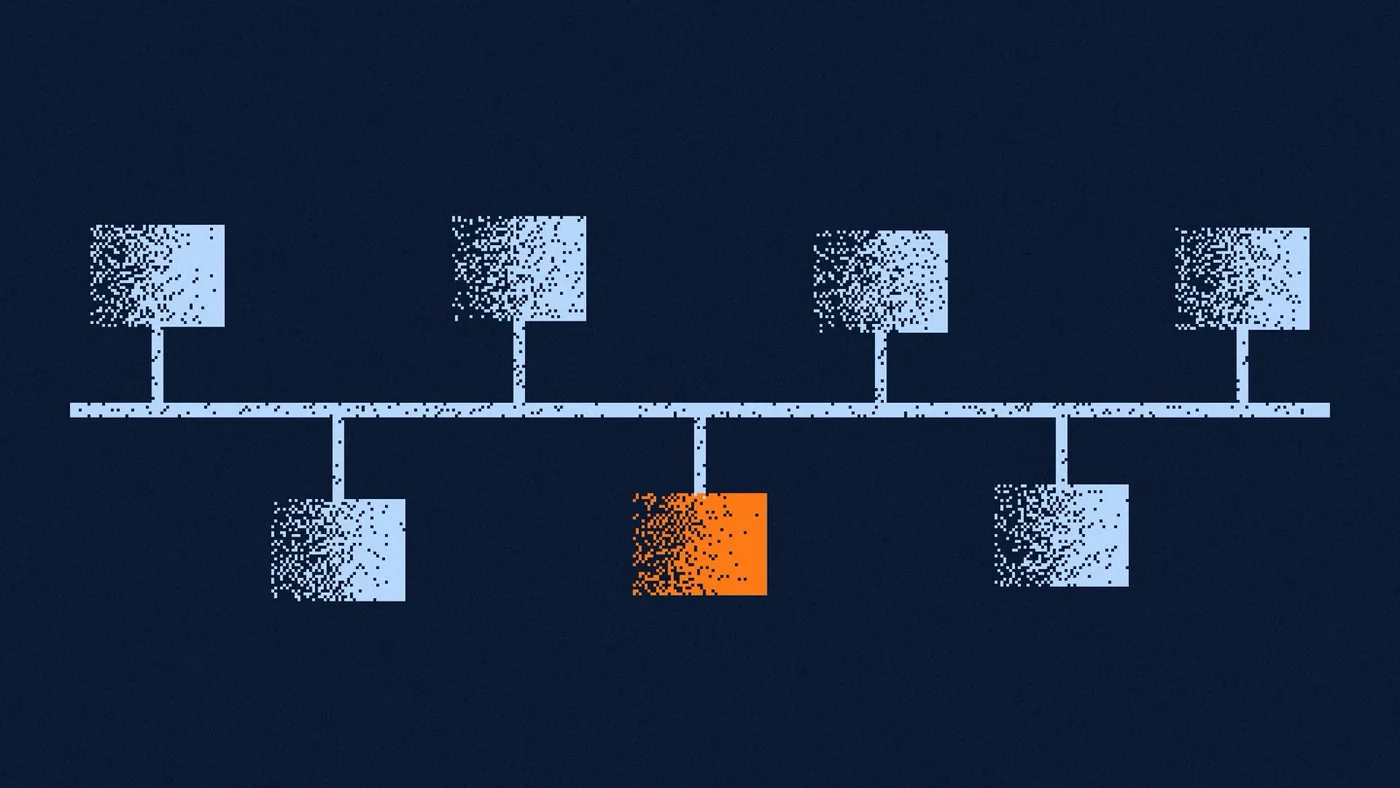
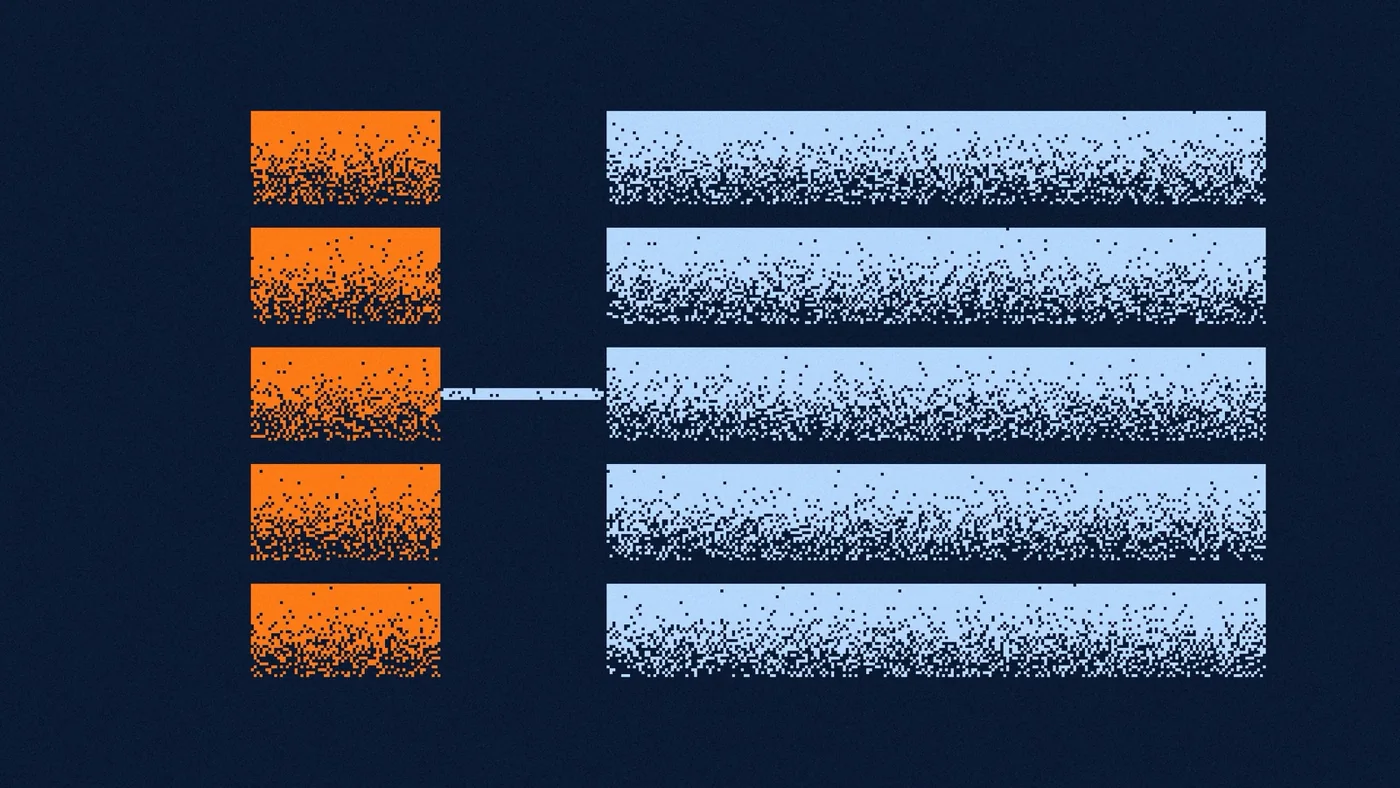
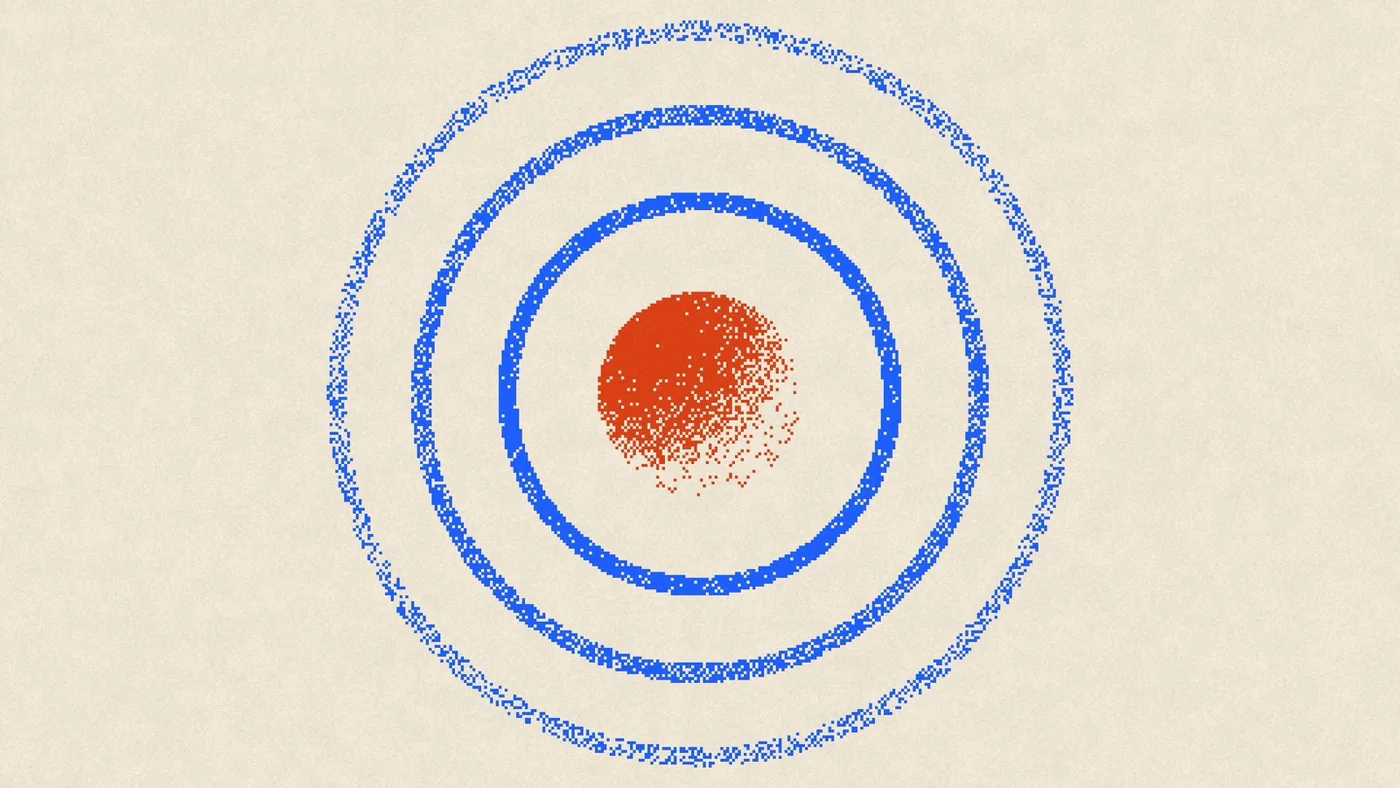
The shader above, as stills: one concept per image, orange for the subject and blue for the structure, roughly one orange element to every three to ten blue ones. Every concept page on axoniq.io has one, in light and dark.


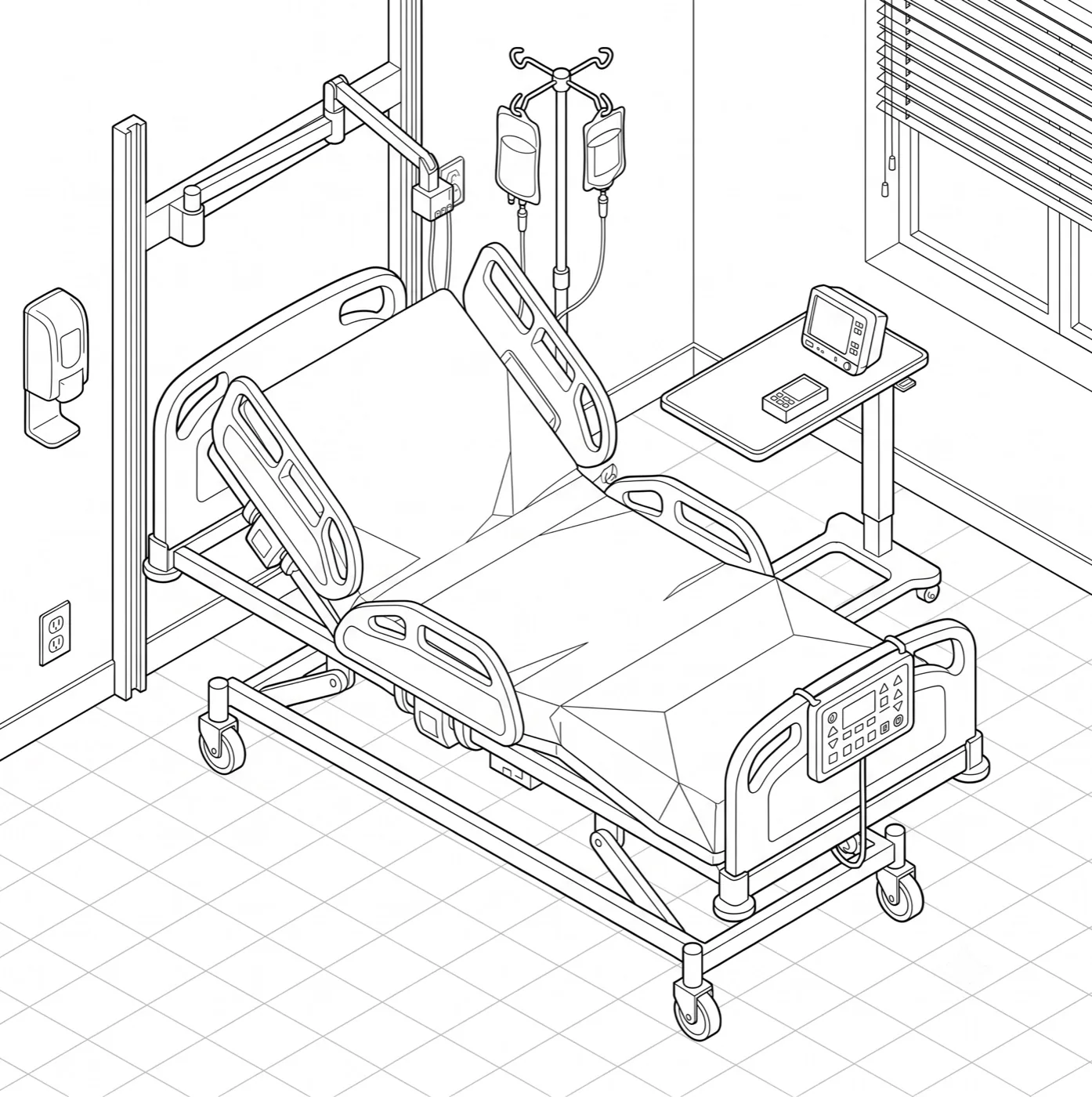
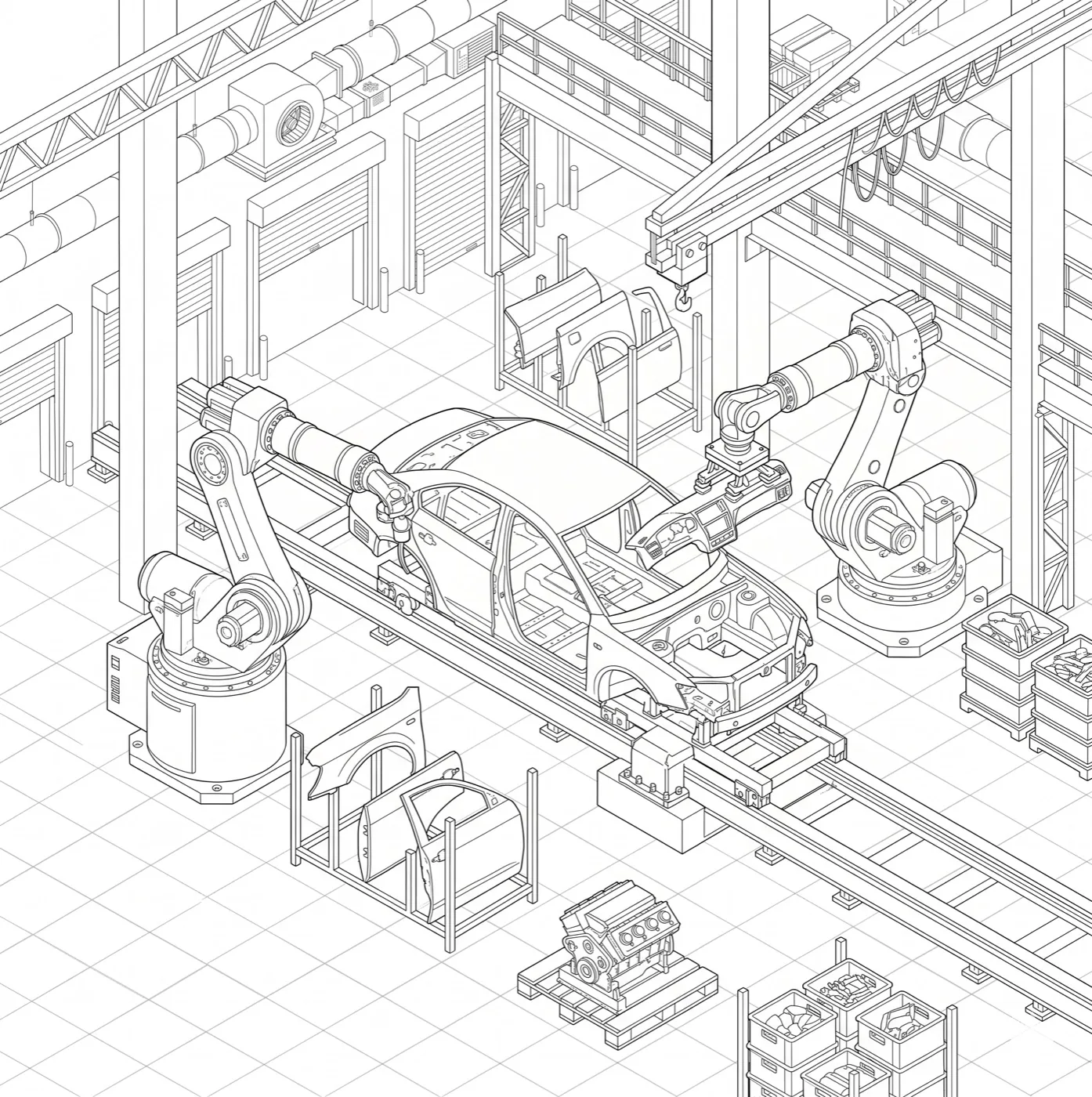
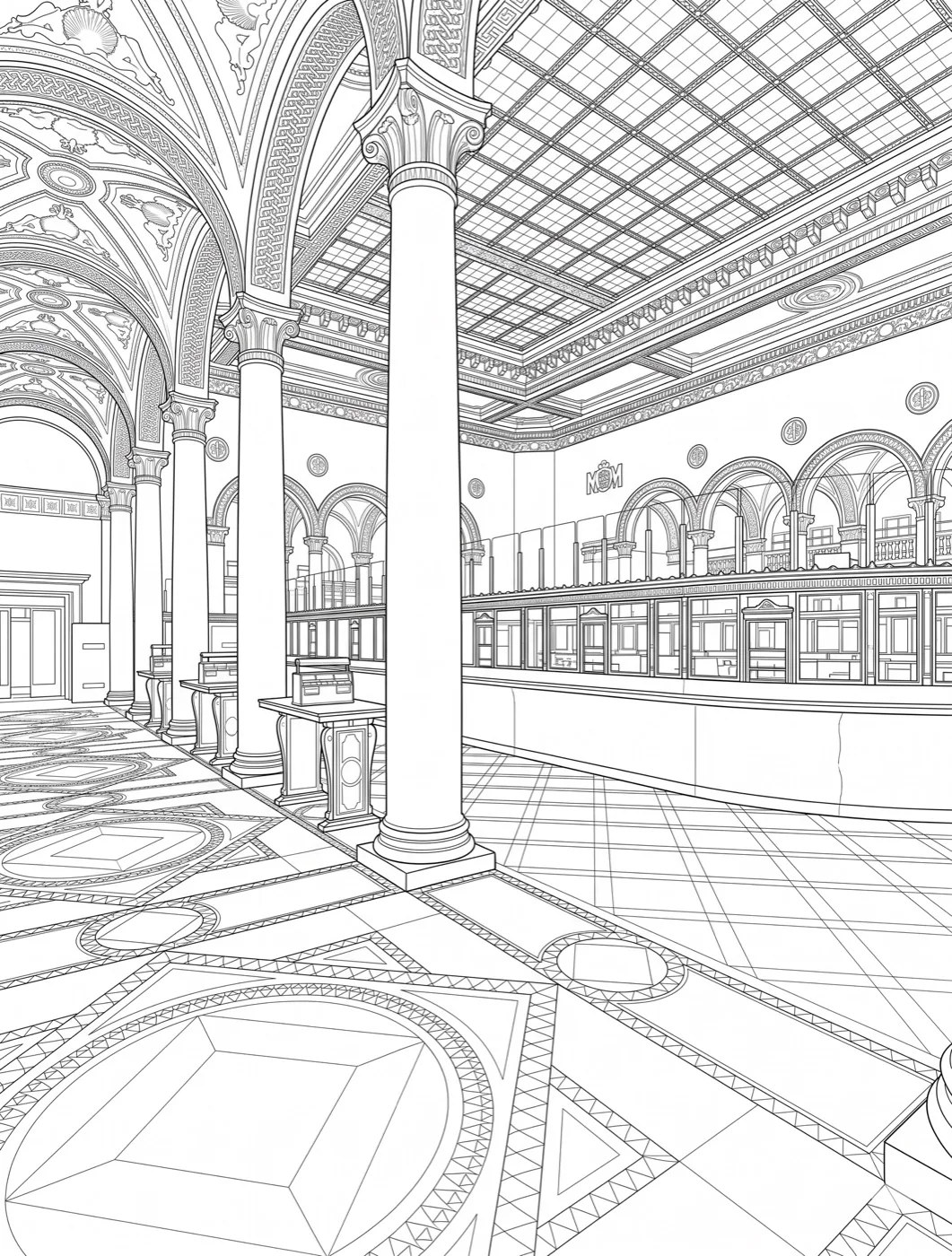
Isometric, for places
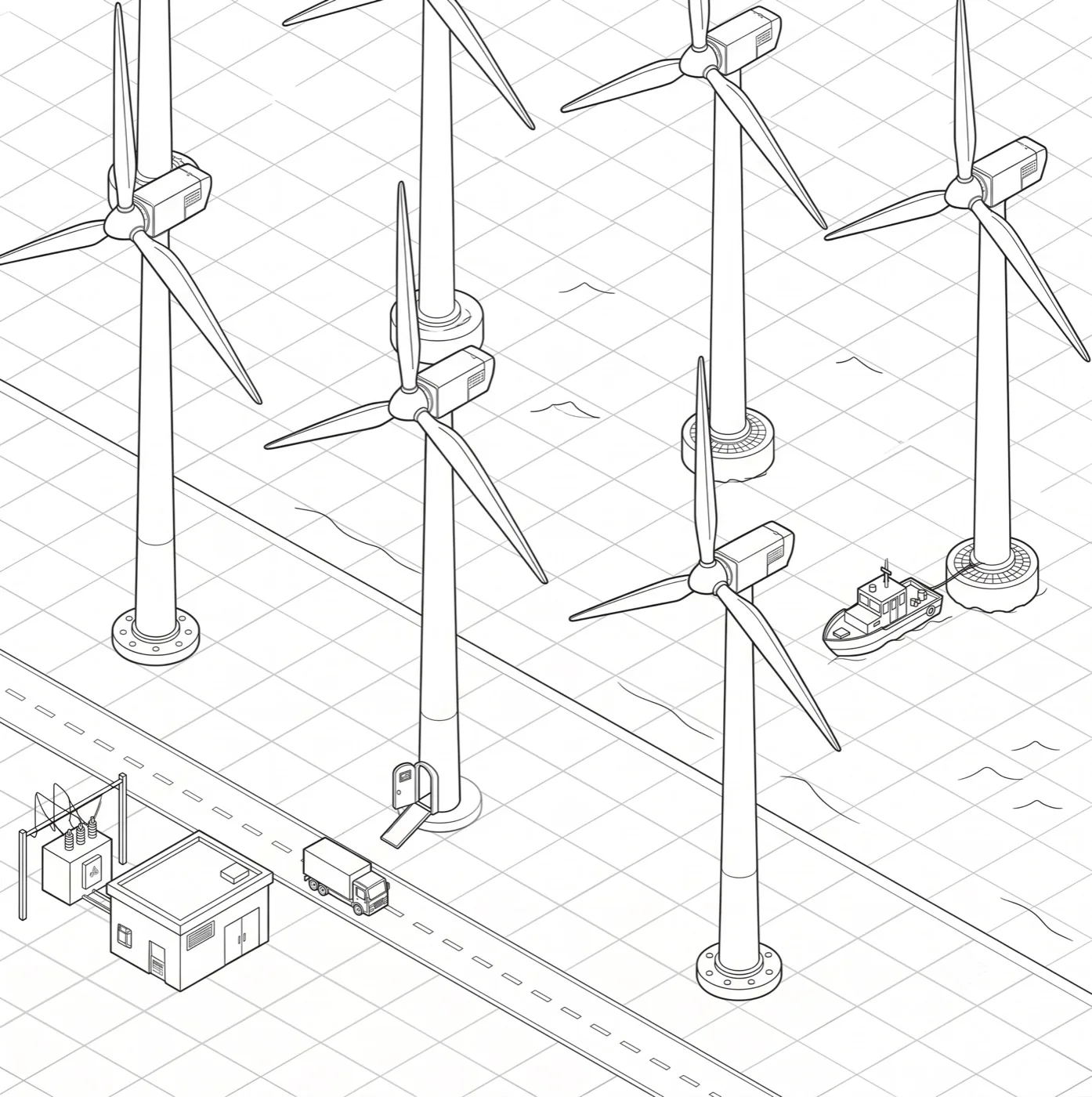
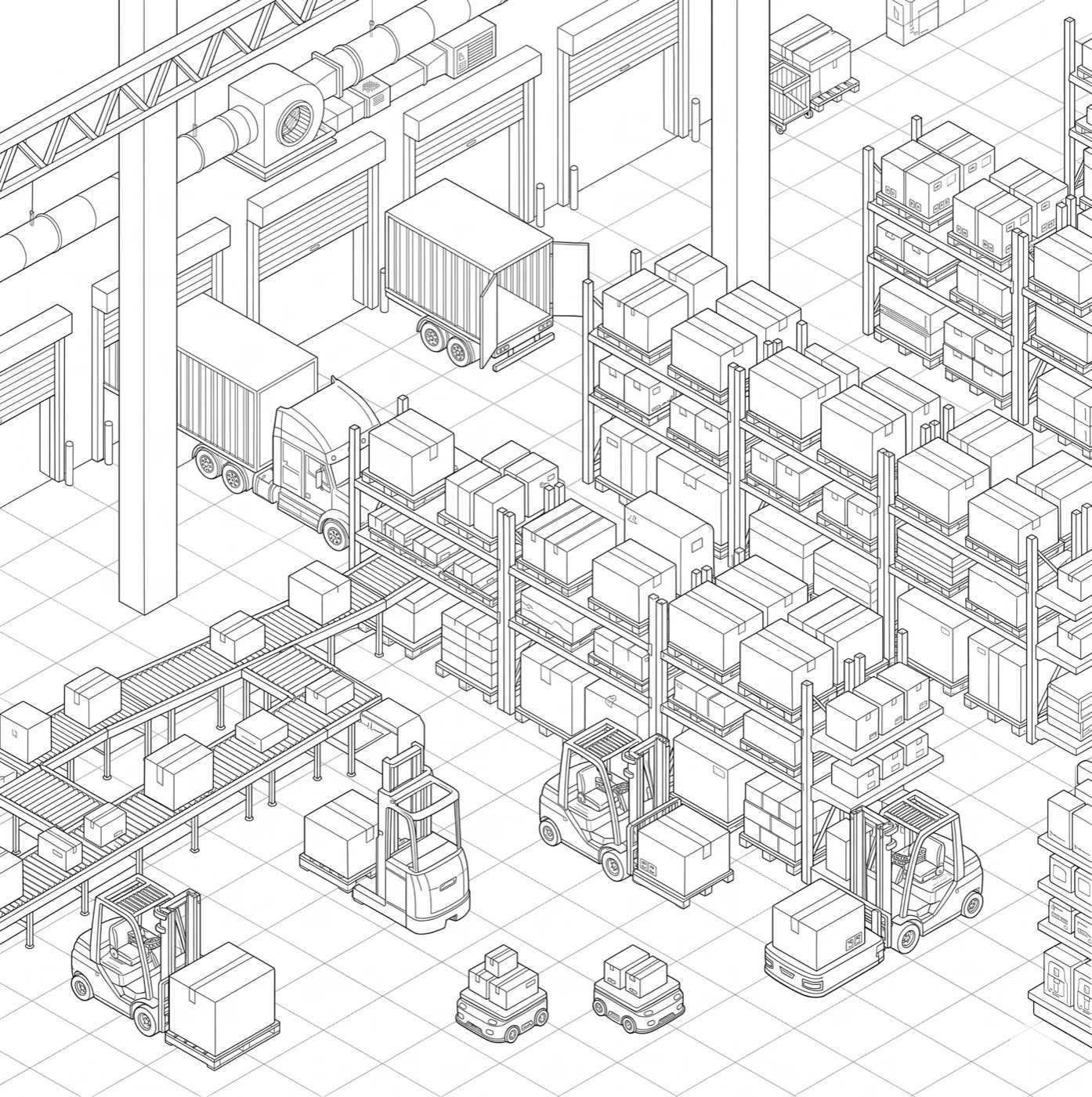
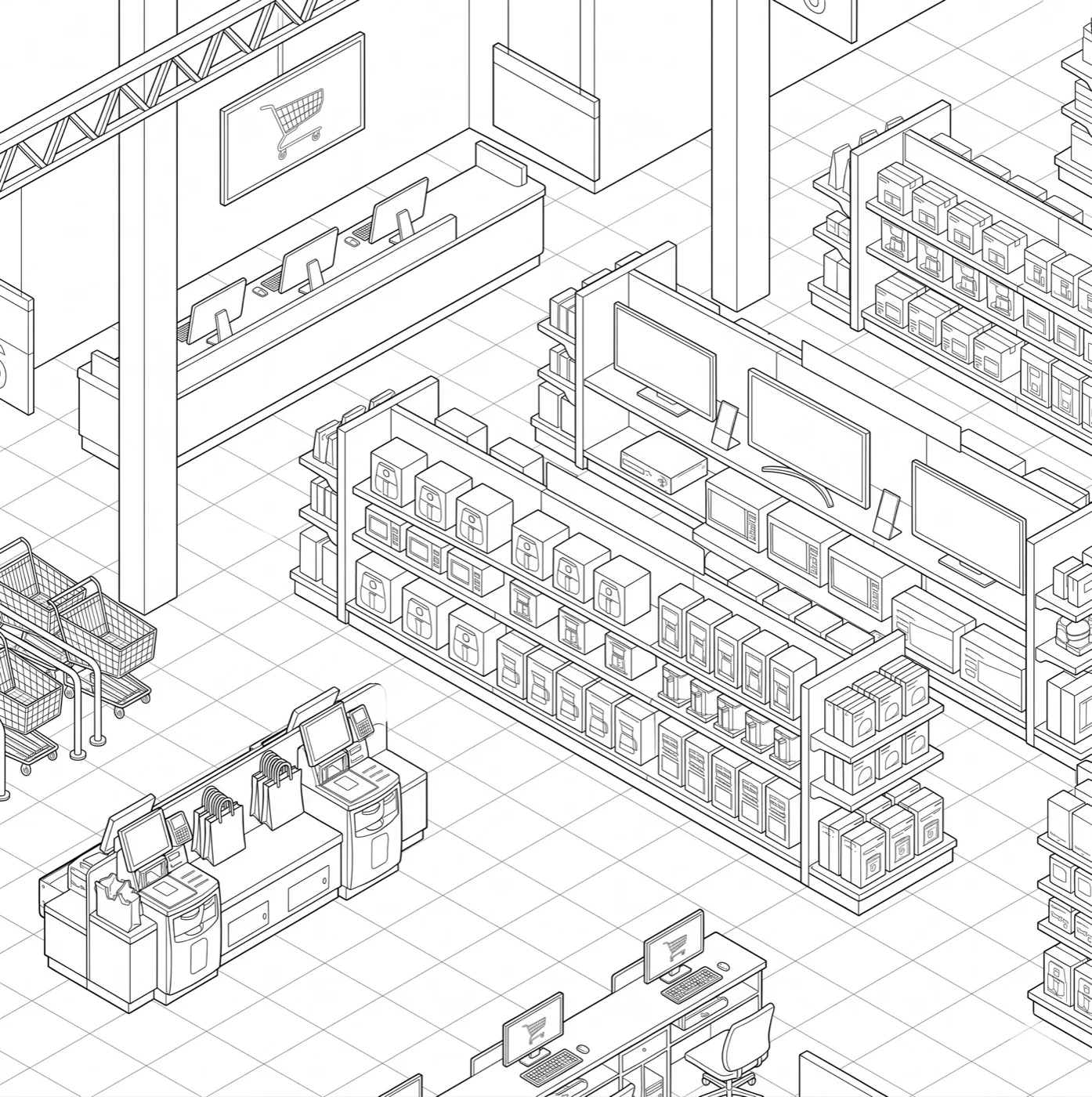
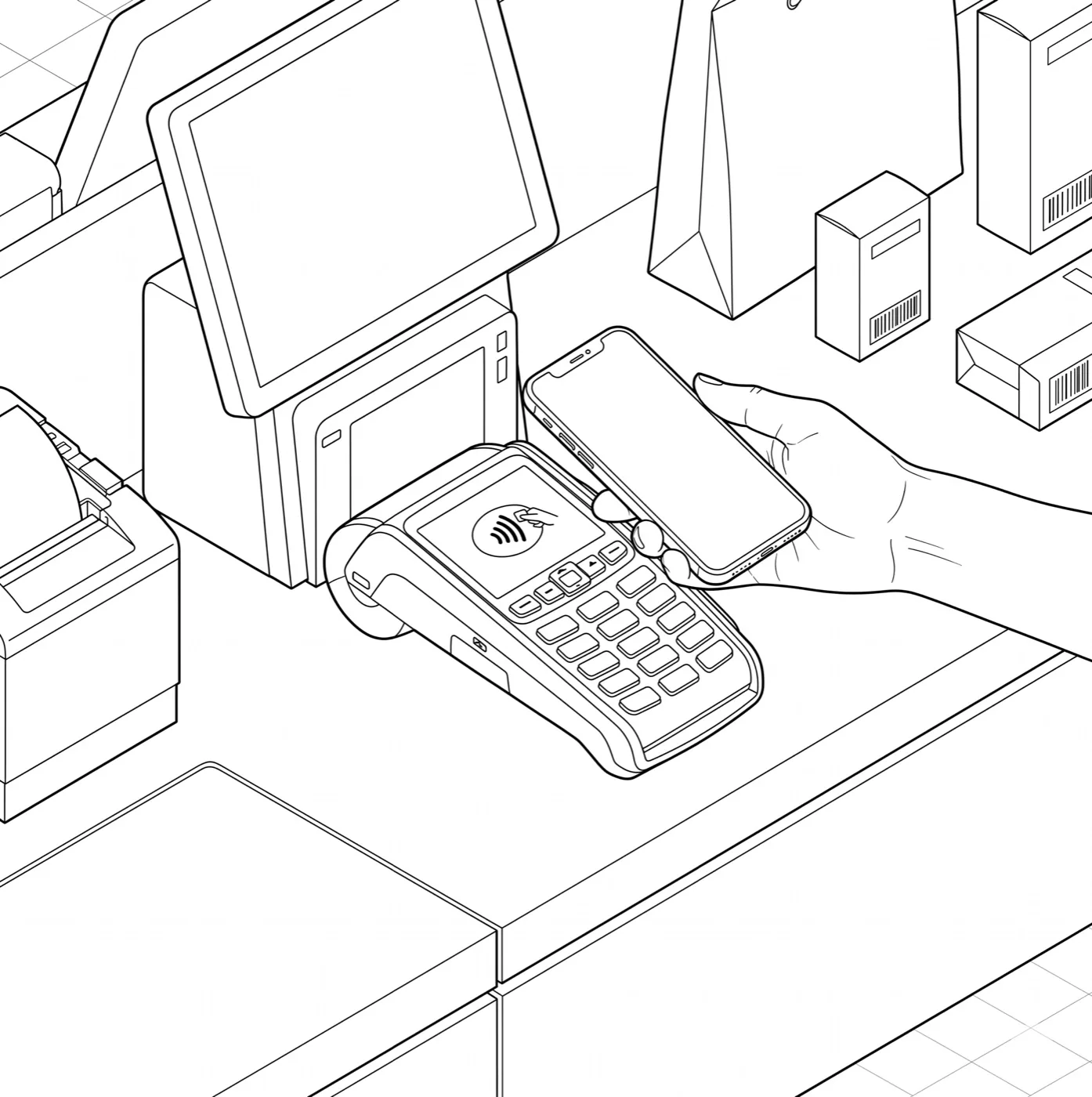
The workload and industry pages needed to show the places where Axoniq software runs, without stock photography. The isometric scenes are monochrome line drawings, one per sector: an offshore wind farm with its service vessel, a fulfilment warehouse, a hospital room, a car plant, a grand banking hall. They're generated with Gemini from one brief and curated in Figma, and the rules say not to make new ones ad hoc: a new scene reuses the brief, so the line weight, grid and perspective match. They never share a composition with riso.